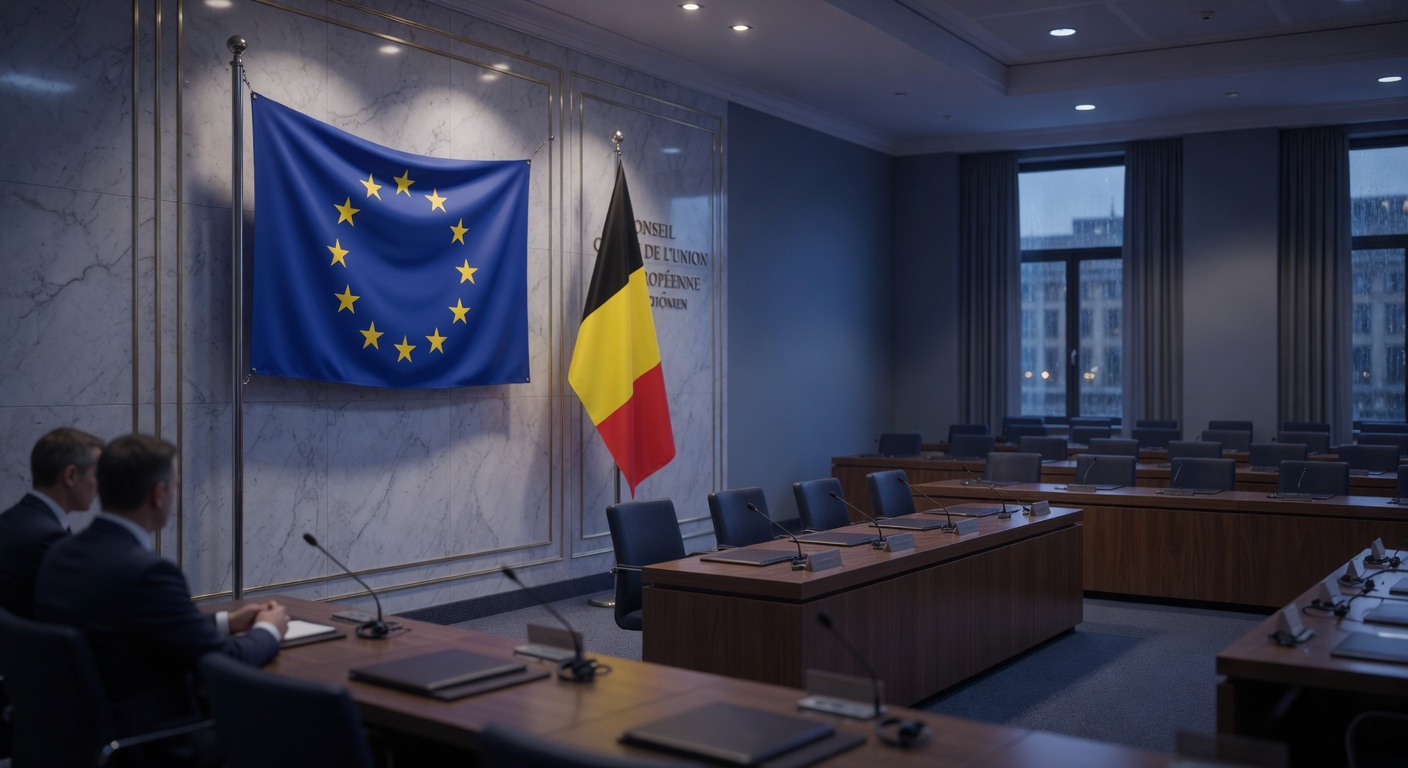
Eight in ten Belgians believe the European Union should pursue a more independent foreign policy and reduce coordination with the United States, according to survey data released May 29. Belgian support for strategic autonomy exceeds the EU average of 73%, reflecting a growing desire for Europe to follow its own geopolitical path.
The shift aligns with a broader European trend. Bertelsmann Stiftung reports that 73% of EU citizens now believe the Union should “go its own way,” up from 63% in 2024. This trend follows a trust deficit, with 58% of EU citizens viewing the United States as an untrustworthy partner. Support for the US as Europe’s most valuable ally dropped from 51% to 31% since 2024.
Belgian Prime Minister Bart De Wever frames this movement toward strategic autonomy as a “condition of freedom” rather than an alternative to the NATO alliance. De Wever argues that Europe must stop “drifting on waves created by others” to avoid external geopolitical shocks. He maintains that while NATO remains a necessary safeguard, Europe requires its own military capabilities to act autonomously.
The push for independence extends to economic leverage. De Wever suggests Europe can use its position as the world’s largest market to resist external pressure, citing the EU’s response to the Greenland crisis as a proof-of-concept for using economic tools to protect sovereignty.
Structural dependencies remain. Belgium relies on US hardware, including F-35 fighter jets and NASAMS missile systems, because viable European alternatives do not exist. To address this gap, Belgium is using €8.34 billion in low-interest loans from the EU’s Security Action for Europe (SAFE) programme to strengthen its domestic defense sector.
The shift in Belgium mirrors a broader trend across the European Union, where the gap between younger and older voters is closing. Public support for reducing coordination with the United States is now consistent across age groups, reflecting a systemic change in how Belgian citizens perceive the EU-US geopolitical relationship.