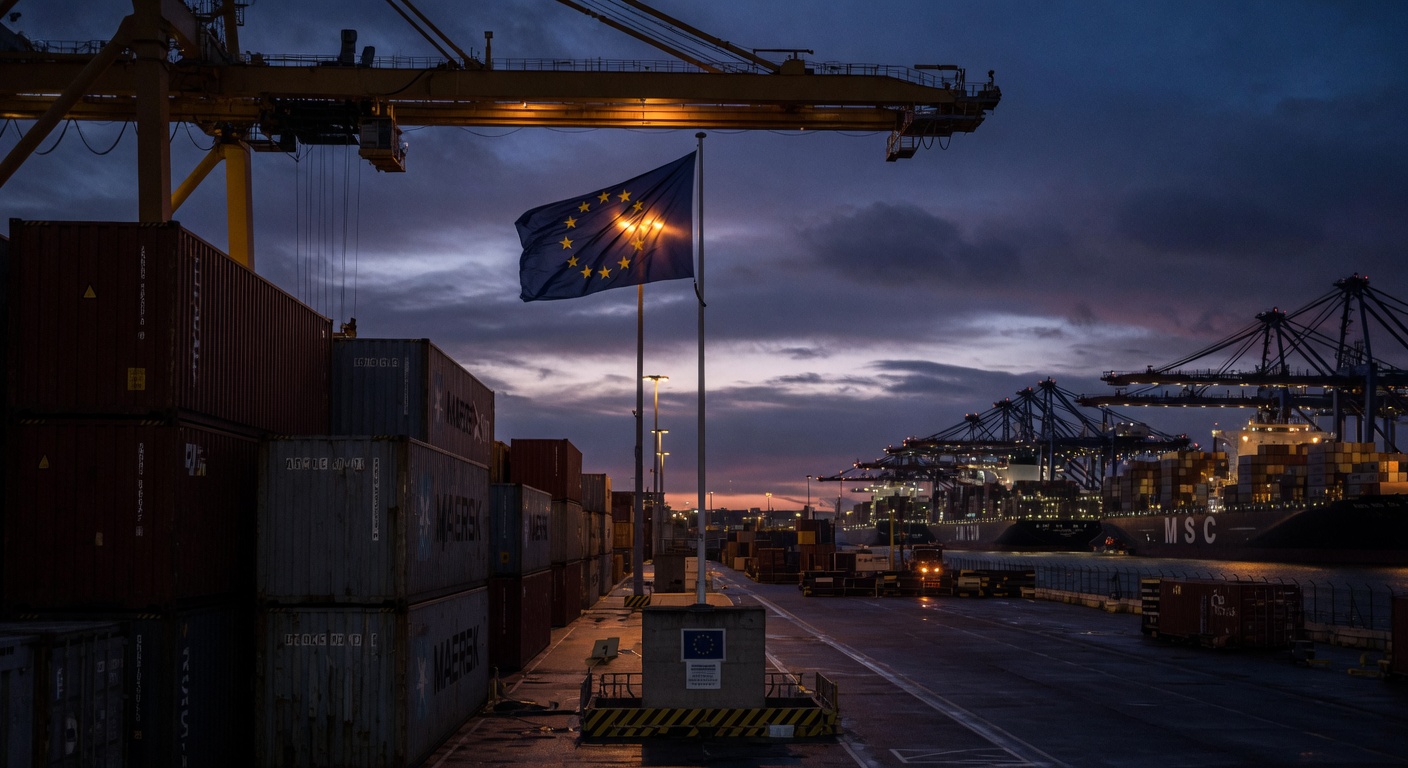
A coalition of five EU member states—Spain, France, Italy, the Netherlands, and Lithuania—has demanded a tougher trade regime and emergency tariffs against China to combat industrial overcapacity. The group circulated a joint policy paper (non-paper) ahead of a May 30 European Commission meeting, shifting from “de-risking” toward active trade confrontation to protect European manufacturing.
The coalition’s joint non-paper demands faster emergency tariffs, expanded safeguards, and import quotas to protect European industrial capacity from systemic overcapacity in China, where state subsidies have lowered export prices. The push for trade curbs now explicitly includes chemicals, metals, and clean-tech, including solar inverters, beyond electric vehicles.
The European Commission declared the EU-China trade relationship “not sustainable” during a meeting on May 30, 2026, citing a trade imbalance of approximately €360 billion. While the Commission maintains the “de-risking, not decoupling” framework in public readouts, internal pressure from the five-nation bloc is forcing a shift toward aggressive trade tools.
German business leaders resist the proposal, fearing a “trade shield” will trigger retaliatory measures from Beijing that jeopardize German exports. China has vowed retaliation and warned that the EU cannot “afford” a trade war, framing the proposed tariffs and quotas as protectionism.
The use of a non-paper allows Spain, France, Italy, the Netherlands, and Lithuania to signal a unified hardline position without formally altering treaty-based trade policies. This industrial vanguard is attempting to force the Commission to react to a pre-formed consensus of diverse European economies.
Although the European Commission maintains its “de-risking, not decoupling” strategy in official communications, internal pressure from the five-nation coalition is mounting. The Commission’s admission that the current trade relationship with China is “not sustainable” provides an opening for the coalition to push for a more confrontational industrial policy.