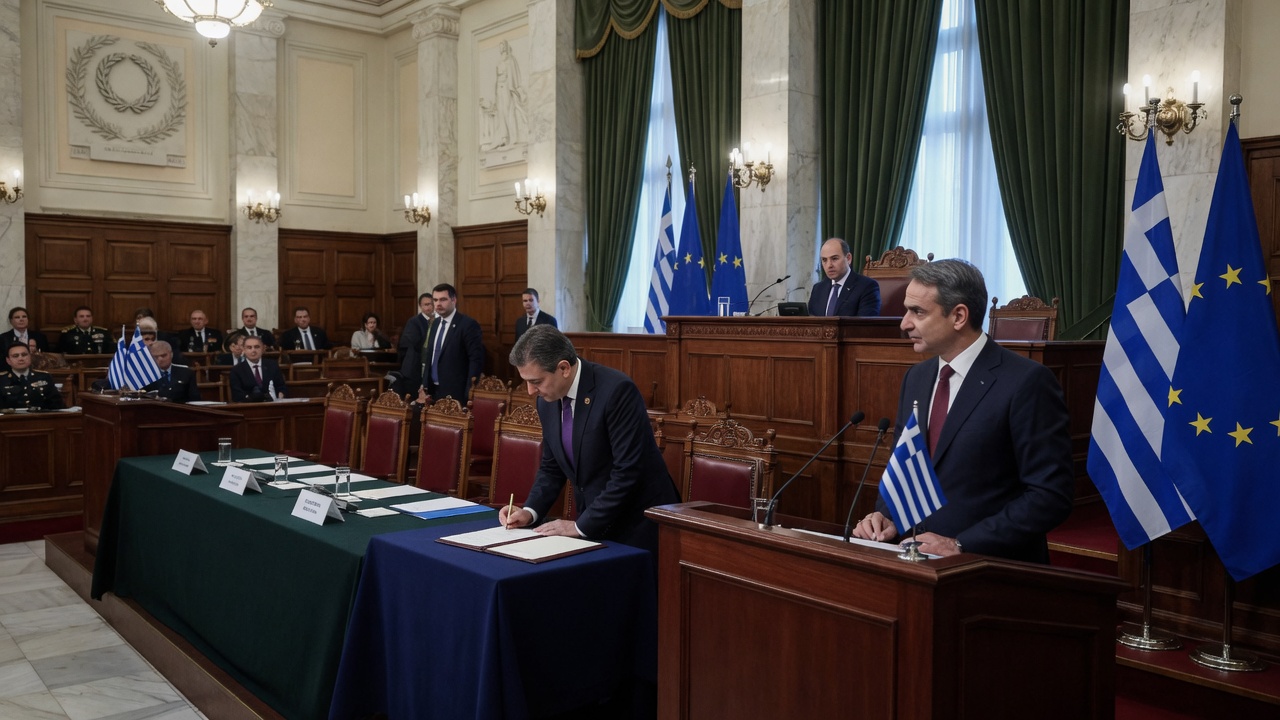
EU Defence Commissioner Andrius Kubilius announced on June 13, 2026, the signing of the Security Action for Europe (SAFE) agreement with Greece. The pact funds Greece’s defense capabilities in the Mediterranean, specifically strategic surveillance, secure communications, and counter-drone technologies to strengthen the EU’s southern security flank.
The agreement emphasizes Greece’s defense posture in the Mediterranean. Kubilius described the signing as “another strong milestone for #SAFE and European security,” framing the pact as a critical step in establishing a “Mediterranean Flank Watch” to complement security efforts on the EU’s eastern border.
The SAFE instrument provides financial assistance via loans for defense procurement. Greece’s funding is estimated at approximately €800 million, drawn from a broader EU program that has allocated up to €150 billion in loans to strengthen collective defense capabilities.
The focus on counter-drone technology aligns with Greek military doctrine. Defence Minister Nikos Dendias stated on June 12 that anti-drone systems are now central to the nation’s strategy. The recent launch of a new drone manufacturing facility in Malakasa supports this operational shift.
Despite EU financial support, Greece continues to procure non-EU hardware for immediate operational needs. This includes the recent expansion of its V-BAT VTOL drone fleet from US-based Shield AI for maritime intelligence, surveillance, and reconnaissance (ISR) missions in the Aegean.
The SAFE agreement reflects a broader EU effort to coordinate defense procurement. By using loans to fund strategic infrastructure, the EU aims to reduce fragmentation in national defense spending and secure critical maritime and aerial corridors. The Greek initiative mirrors a trend among Mediterranean states upgrading surveillance to address hybrid threats and irregular migration.