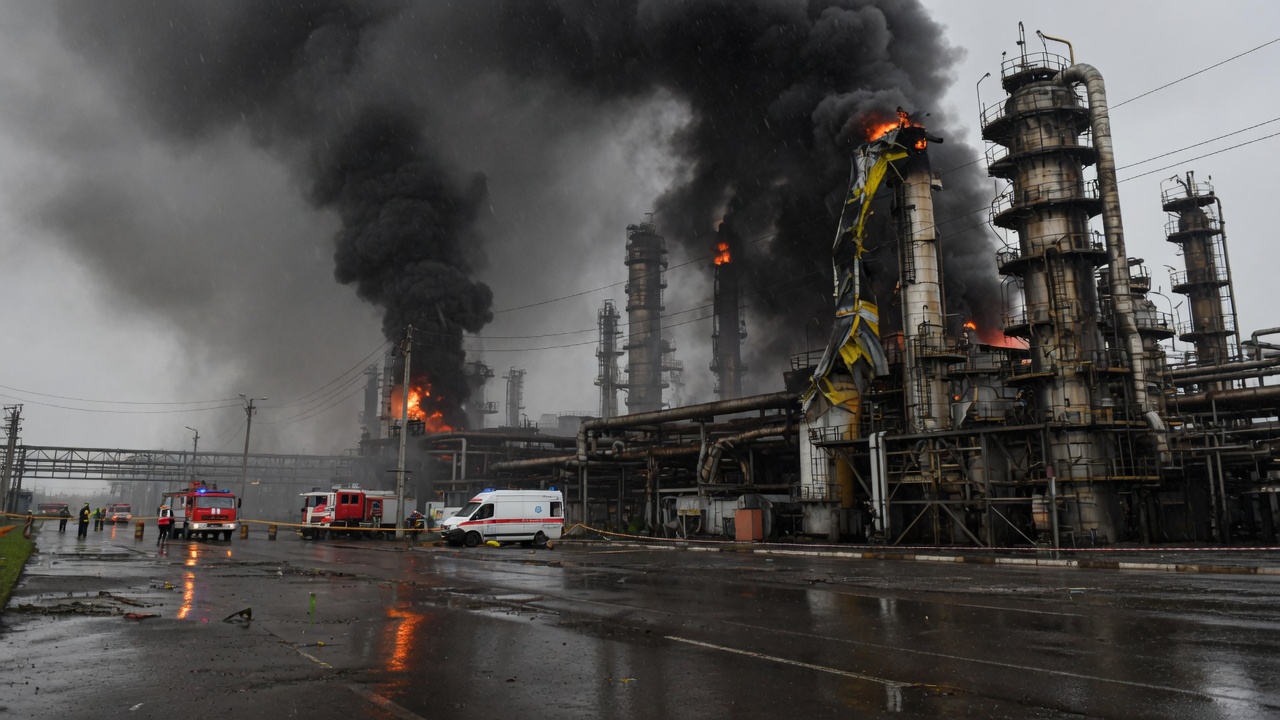
Ukraine launched its largest-ever drone attack on Moscow on Thursday, June 18, 2026, striking a major Gazprom Neft-operated oil refinery in the Kapotnya district. Moscow Mayor Sergei Sobyanin reported that defenses intercepted approximately 194 drones over the capital, causing widespread aviation disruptions and wounding 17 people, including two children.
The strike hit the Kapotnya refinery, which provides approximately 30-40% of Moscow’s fuel. Resulting fires caused significant environmental damage; residents reported “black rain” consisting of soot-contaminated rainfall. Local authorities advised citizens to wear masks and limit outdoor exposure.
The attack disrupted Moscow’s infrastructure. All major airports, including Sheremetyevo, Vnukovo, and Zhukovsky, temporarily suspended flights, leading to over 170 cancellations by Aeroflot and Rossiya. Damage also hit a high-rise building in the Zhukovsky district and the Sadovod shopping center.
President Volodymyr Zelensky described the operation as a “fully justified response” to Russian strikes on Ukrainian cities, specifically citing the June 15 attack on the Kyiv Pechersk Lavra monastery. “If Ukraine burns, so will Moscow,” Zelensky stated. Ukraine’s Foreign Minister, Andrii Sybiha, told Moscovites questioning the events to ask President Putin when he plans to end the war.
Russian Foreign Minister Sergei Lavrov promised “major strikes” and “group strikes” against Ukraine. The Russian Defense Ministry reported that 555 drones were intercepted nationwide between Wednesday night and Thursday morning. President Putin was in Kazan for an ASEAN summit during the attack and did not publicly mention the strike while meeting with the Philippine president.
The attack on the Kapotnya refinery follows a similar strike on the same facility on June 16. The operation is part of a broader Ukrainian campaign to target Russian oil infrastructure and reduce Kremlin fuel revenues. To mitigate resulting shortages, Russia has increasingly imported fuel from Asia by sea.