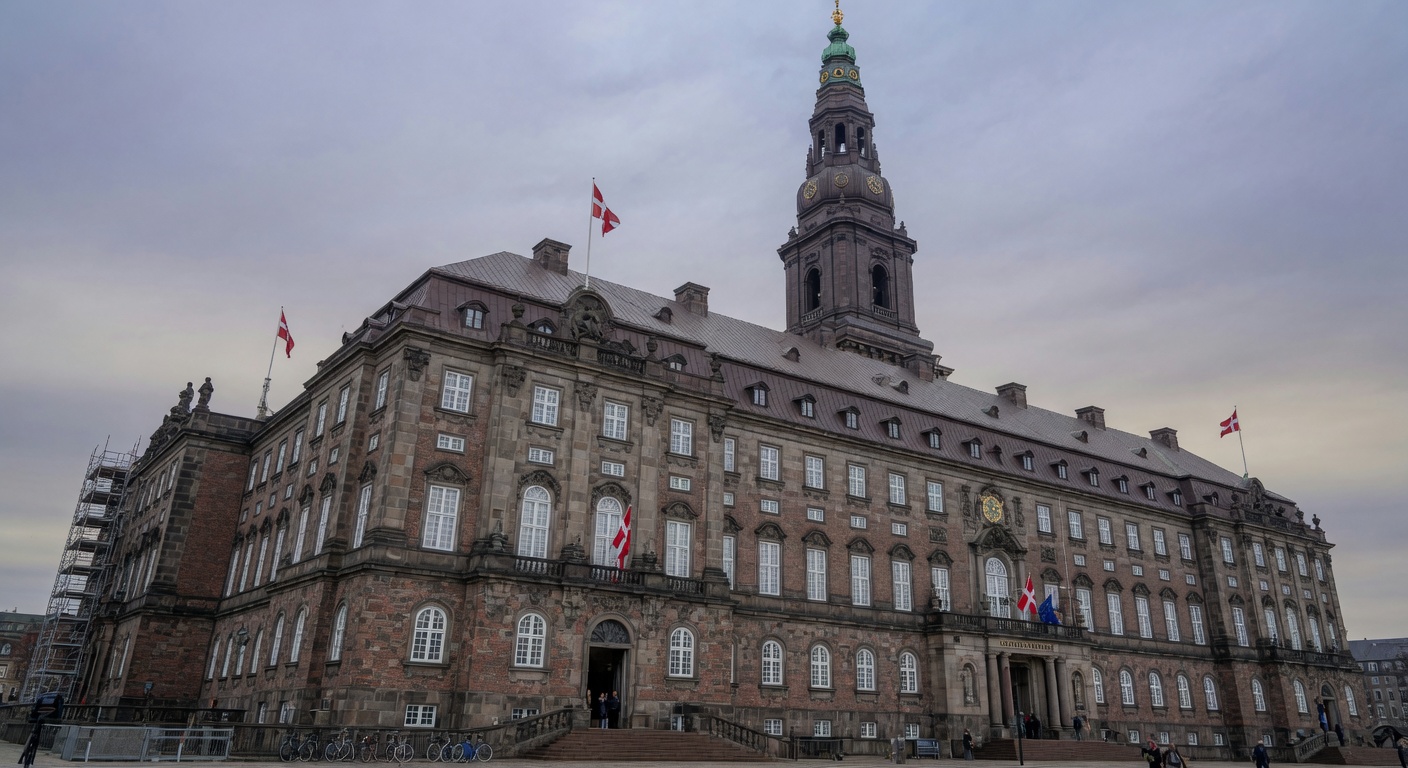
Danish Prime Minister Mette Frederiksen announced a new four-party, left-leaning minority coalition government on June 1, 2026. The government—comprising the Social Democrats, Social Liberals, Green Left, and Moderates—shifts domestic policy left while maintaining Denmark’s strict migration controls. The coalition ends two months of political uncertainty following the fragmented March general elections.
The new coalition focuses on the cost-of-living crisis through aggressive domestic measures. The government plans to halve VAT on food and provide free public transport for young people to alleviate economic pressure on households. These policies satisfy the requirements of the Green Left and the far-left Red-Green Alliance, which provides the minority government’s primary parliamentary support.
Prime Minister Frederiksen is maintaining a hard line on immigration. The government will uphold and advocate for radically tightened migration policies to neutralize the radical right by absorbing its core security and border concerns. This “policy absorption” approach allows the coalition to pursue a left-wing social agenda while preventing populist parties from gaining a monopoly on the migration debate.
The administration is also taking a firm stance on national sovereignty regarding Greenland. The government vowed to resist “unacceptable pressure” from the United States concerning control of the island. This follows extreme tension in early 2026, including reports of Danish troop deployments to Greenland in January to deter potential US aggression.
This government follows the longest coalition negotiations in Danish history. Political deadlock began after the March general elections, which resulted in a fragmented parliament and the Social Democrats’ lowest election score since 1903. The four-party alliance was finalized after right-leaning attempts to form a government, led by Venstre leader Troels Lund Poulsen, failed in May.