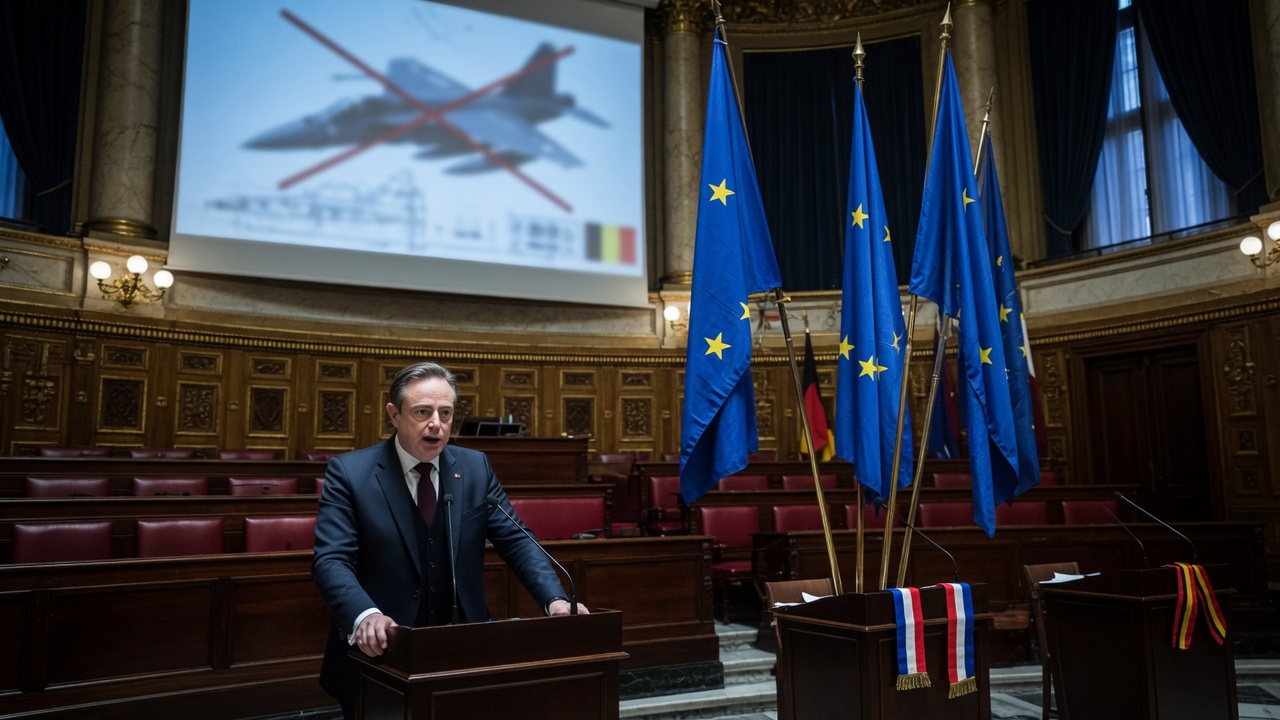
Belgian Prime Minister Bart De Wever called the abandonment of the Franco-German Future Combat Air System (FCAS) fighter jet project “pure stupidity” and “arrogance” on Tuesday, June 9, 2026. The decision to scrap the sixth-generation aircraft follows a protracted industrial deadlock between France’s Dassault and Germany’s Airbus over intellectual property and work-share.
The collapse stems from the failure of Dassault and Airbus to reach an agreement regarding the division of work and the sharing of intellectual property rights for the New Generation Fighter (NGF), the system’s manned component.
French President Emmanuel Macron and German Chancellor Friedrich Merz formalized the failure after determining the industrial giants would not find common ground. Chancellor Merz notified President Macron of the decision on June 6 during the EU Western Balkans Summit in Montenegro, with a public announcement following on June 8 at the ILA Berlin airshow.
De Wever’s comments highlight the frustration of smaller EU member states caught in the industrial disputes of the continent’s largest economies. Belgium joined the FCAS project as an observer in 2023. While the Belgian government earmarked €68 million for research and development, Defence Minister Theo Francken previously informed parliament that only €10-20 million had been spent.
The project was estimated to cost between €100 billion and €116 billion. While the manned fighter jet program is scrapped, the “combat cloud” and unmanned drone components of the wider FCAS framework may still proceed.
The failure of the FCAS project increases European dependency on non-European defense systems, particularly the US-made F-35. Despite the potential continuation of the “combat cloud” and drone components, the industrial deadlock has resulted in the strategic loss of a sixth-generation European aircraft.