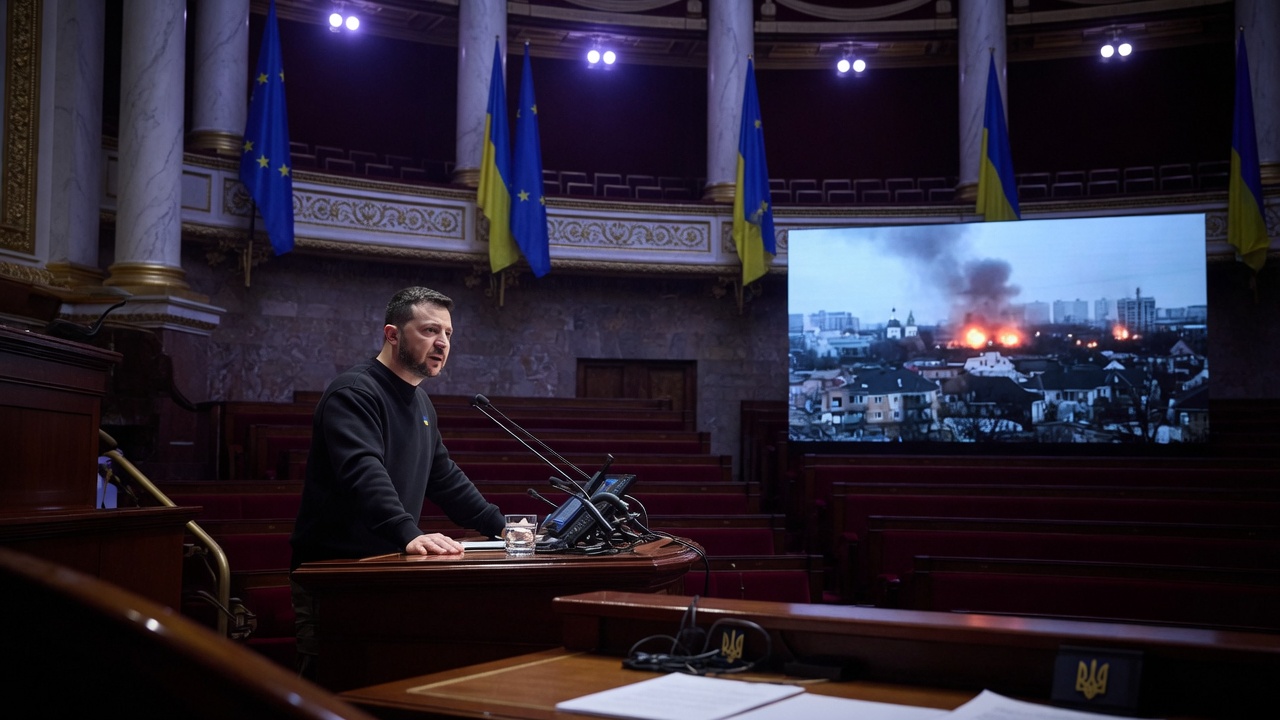
President Volodymyr Zelenskyy stated on June 9, 2026, that Ukraine is intensifying long-range drone strikes on Russian cities to make the Russian population “feel” the reality and tragedy of the war. Speaking to The Guardian, Zelenskyy argued these operations are necessary to break domestic apathy and force Russian society to recognize the conflict as its own tragedy.
Zelenskyy described these operations as “long-range sanctions” targeting the economic capacity and psychological comfort of the Russian state. Recent strikes include attacks on oil terminals in St Petersburg on June 3, timed to disrupt the city’s international economic forum, and logistics targets in occupied Crimea. These operations have contributed to documented fuel shortages in Russian-controlled areas.
The President assessed the military situation, claiming Russia loses its initiative daily. He stated that Russian forces lose approximately 30,000 soldiers per month, including 23,000 to 24,000 deaths.
NATO responded to the intensified drone campaign, with the Secretary General describing Russia as “increasingly desperate.” President Vladimir Putin rejected an open letter from Zelenskyy on June 5 offering a face-to-face meeting, reaffirming his demands for the Donbas and southern provinces.
Ukraine is positioning itself as a “drone superpower,” evolving from an aid recipient to an innovation hub. Zelenskyy has offered to share this operational experience with NATO and EU allies in exchange for strategic air defense support.
Zelenskyy’s recent meetings with European leaders in London underscore a strategic shift toward European defense autonomy. He urged the EU to develop an alternative to the American Patriot system to secure Ukraine’s skies. These diplomatic efforts coincide with Ukraine’s offer to trade its drone warfare expertise for increased strategic air defense support from NATO and EU allies.