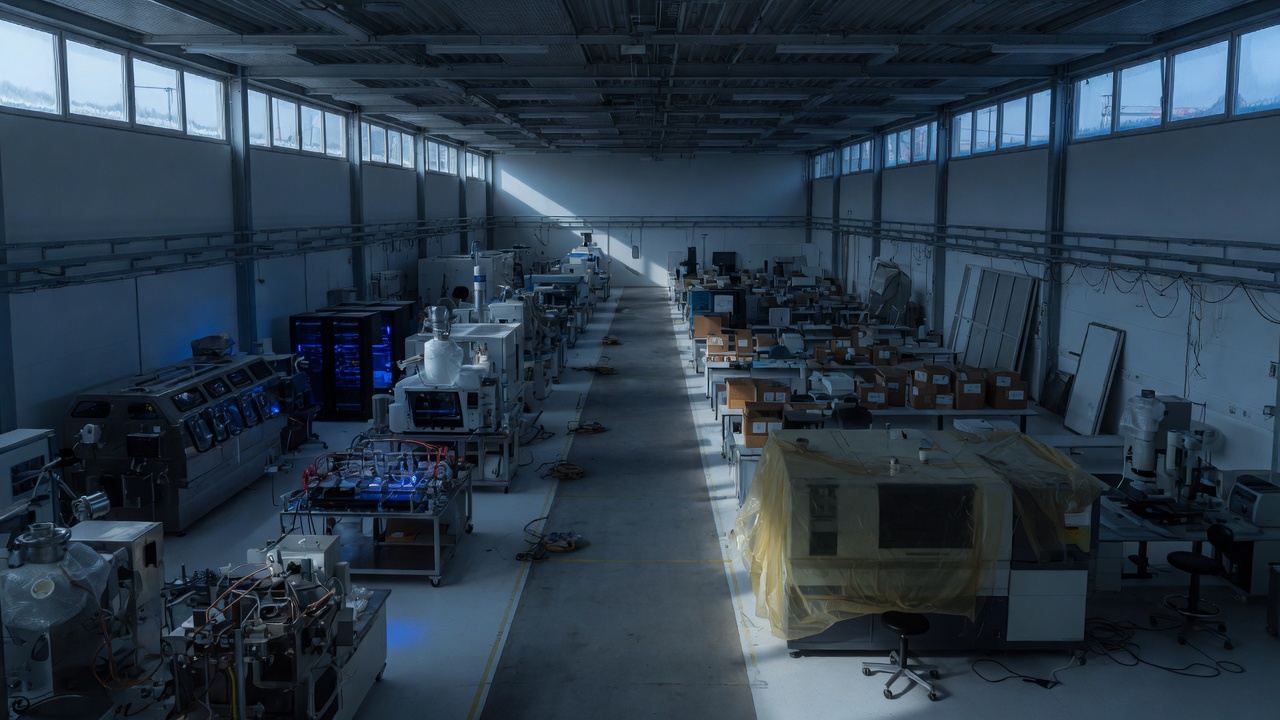
The transition from Horizon Europe to the 10th Framework Programme (FP10) risks becoming an administrative exercise in continuity. Without a structural shift toward concentrated investment, Europe will continue to produce world-class science that it cannot translate into strategic power.
The Risk of Ambition Decay
The European Commission is currently designing the architecture for FP10, the next cycle of research and innovation funding. A CEPS analysis warns of “ambition decay,” a condition where the EU manages existing programs instead of designing a scientific enterprise capable of addressing the polyrisk age. The current model spreads resources too thinly across fragmented silos. This leaves high-quality research trapped in a “valley of death” where it fails to scale into industrial leadership.
In January 2026, the German Federal Ministry of Education and Research (BMBF) explicitly called for faster implementation and flexible funding mechanisms to counter this stagnation. The move reflects a recognition that the “rulemaker” model—relying on market size to set global standards—is insufficient. To avoid becoming a mere battleground for US-China rivalry, Europe requires an indigenous capacity to scale technology from the lab to the market.
The Scaling Architecture
The transition to FP10 is constrained by a legal and budgetary framework that prioritizes administrative continuity over strategic design. A coalition of seven research bodies, including CESAER and LERU, has proposed joint amendments to the FP10 legal texts for the 2028-2034 period to prevent the program from becoming “Horizon Europe 2.0.” These amendments target the Recitals and Articles of the program’s governing law. The goal is to move the EU from the “management” of research to the “architecture” of a scientific enterprise.
The structural friction lies in the “valley of death,” where high-quality research fails to translate into industrial leadership because the EU lacks concentrated investment vehicles. Without a fundamental change in how the budget is structured, FP10 will continue to spread resources across fragmented silos. This design ensures a wide distribution of grants but prevents the concentration of capital required to build indigenous high-end capabilities. The legal framework creates a ceiling for ambition.
The Rulemaker Friction
The tension between the “rulemaker” and “tech superpower” models defines the current divide among member states. As ECFR argues, relying on a market-driven regulatory approach is no longer a sufficient strategy. This implies a sovereignty asymmetry where the EU regulates technologies it does not control, effectively turning the continent into a battleground for US and Chinese industrial supremacy.
Germany is leading the push to close this asymmetry. The BMBF is advocating for “agility” mechanisms—specifically faster implementation and flexible funding—to reduce the time between identifying a research need and deploying capital. By moving away from rigid budgetary silos, Germany aims to concentrate funding on areas where Europe can achieve global leadership. The objective is to shift from a model of distribution to one of competitiveness. The political will for agility is present, but the budgetary silos remain.
The Security-Discovery Trade-off
The “Discovery” side of European ambition is currently facing a structural bottleneck in the space sector. A pivot toward security as the primary rationale for investment is marginalizing human and robotic exploration. While Germany has increased its space budget, focusing on defense and security, the European Commission’s planned “European Space Shield” for Q2 2026 remains heavy on ambition but light on disclosed budgets.
This security-first logic risks relegating Europe to the role of a “junior partner” to US initiatives like Starship or Chinese lunar programs. ESPI notes that defining a distinct European ambition beyond these foreign initiatives is the central challenge for 2026. Furthermore, the rise of security priorities threatens to tighten data policies, potentially hindering the open scientific discovery that the FP10 framework is meant to support. Security is expanding. Discovery is contracting.
The Limit of the Funding Model
The transition to FP10 reveals a fundamental friction between administrative continuity and strategic power. Europe can continue to distribute grants across fragmented silos, ensuring broad regional participation, or it can concentrate capital to build the high-end capabilities required for a tech superpower. This choice is not merely budgetary but structural. The current legal framework prioritizes the management of research over the architecture of discovery.
Until the EU adopts a concentrated investment strategy, scientific excellence will remain a resource that Europe produces but cannot deploy. The capacity remains latent.
Sources
- cdn.ceps.eu
- ecfr.eu
- Documents the German state’s specific position on agility and competitiveness.
- Provides the hard baseline data on the €14bn allocation for the 2026-27 window.
- Technical details on the “how” of FP10 amendments.
- Context on the 2026 space implementation window.
- Analysis of ESA/EU vision alignment.