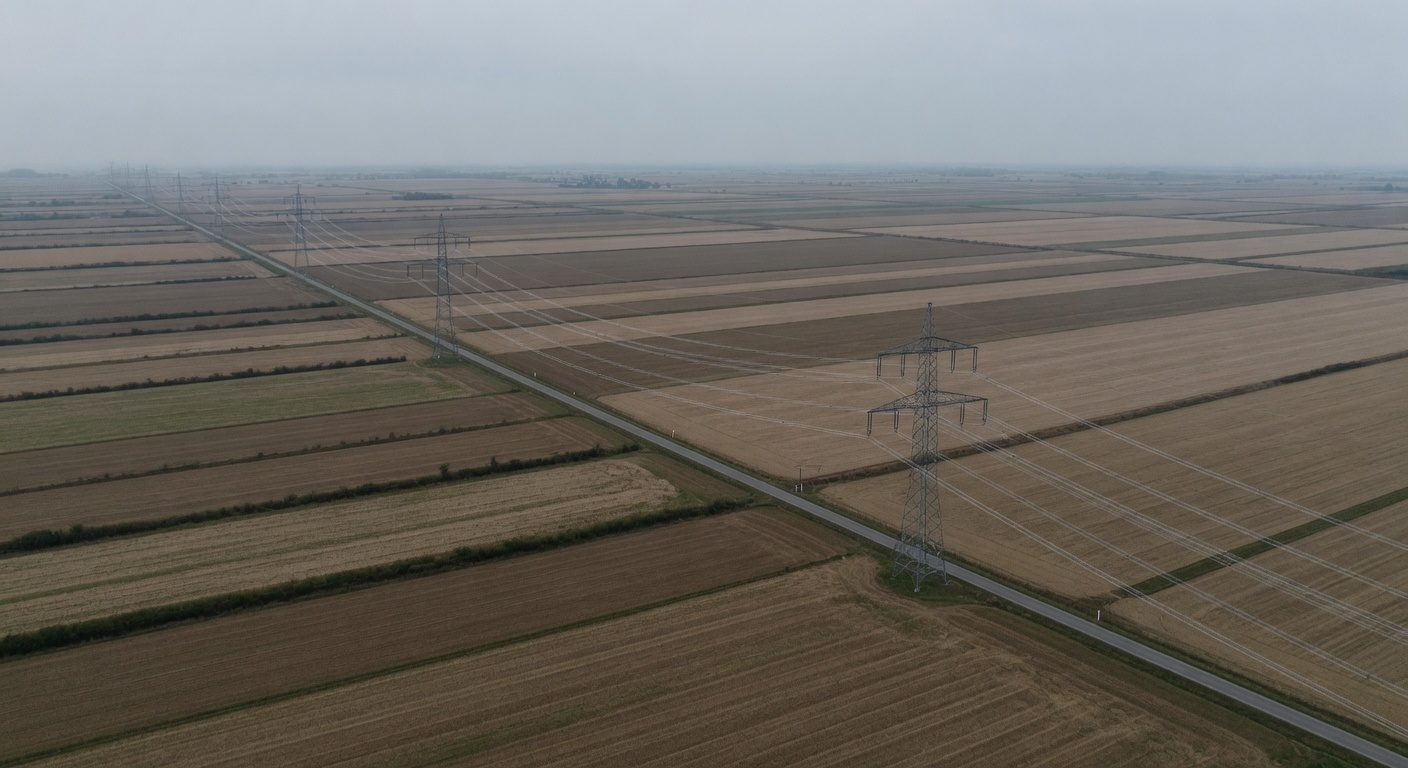
On May 13, 2026, EU energy ministers met to confront a structural vulnerability: the bloc’s systemic dependence on Chinese hardware for power storage, a risk that mirrors the fossil fuel chokepoints currently destabilizing the Strait of Hormuz.
The Convergence of Two Dependencies
The current crisis in the Strait of Hormuz is a diagnostic event. It reveals that Europe’s energy security remains tethered to external chokepoints while the bloc transitions into a new form of hardware dependency. As discussed in the ministerial meetings, Chinese dominance in battery storage infrastructure creates a strategic bottleneck as rigid as any pipeline.
The European Commission has deployed the revised Electricity Market Design (EMD) rules to decouple consumer prices from gas and accelerate renewables integration. Parallel to this, the Connecting Europe Facility (CEF) has identified 235 cross-border projects to boost interconnectivity. These are the correct instruments for a sovereign energy union.
Deployment, however, is uneven. While the legal framework exists, national interests slow implementation. Patria’s view: the “Sovereignty Gap” persists not because of a lack of legislation, but because the political will to integrate energy grids at a federal scale remains fragmented.
The Legislative Architecture of Sovereignty
The EU’s strategy to mitigate energy dependency rests on a structural overhaul of the electricity market. The revised EMD rules decouple consumer bills from volatile short-term gas prices, which previously allowed a single fuel’s price spike to destabilize the entire energy mix. The bloc is now using long-term Power Purchase Agreements (PPAs) and two-way contracts for difference (CfDs) to stabilize investments and lower the cost of capital for renewables.
The Agency for the Cooperation of Energy Regulators (ACER) now possesses expanded powers for cross-border investigations to combat market manipulation. This ensures that the 11.3 million km of transmission lines serving 266 million customers operate as a coherent system rather than a collection of fragmented national markets. On September 30, 2025, day-ahead trading moved from hourly to 15-minute intervals to integrate the 47.5% of electricity now generated from renewables. The Commission estimates this integration could save consumers between €40-43 billion annually by 2030 (European Commission).
The Hardware Paradox: From Gas to Lithium
Despite these gains, a new strategic vulnerability has emerged. The EU is successfully decarbonizing its generation but failing to secure the infrastructure required to store that energy. While renewables targets exceed 60% by 2030, the bloc remains dependent on China for the storage infrastructure that makes this power viable. EU energy ministers in Cyprus on May 13, 2026, noted that the bloc is generating clean power it cannot preserve, leading to wasted energy and grid instability (Euronews).
This is a structural risk. Without a domestic battery and storage industry, the EU’s energy transition relies on infrastructure controlled by a strategic rival, exposing the bloc to economic coercion similar to the Russian gas shock. The ECFR Energy Sovereignty Index quantifies this divergence: while the EU’s “cleanness” score rose to 8.1 in 2024, its “energy independence” score stagnates at 4.0 out of 10 (ECFR). The EU is removing carbon from its mix, but it has not yet removed external control from its supply chain.
The Nuclear Pivot and the Interconnectivity Gap
In response to the volatility of fossil fuel chokepoints, Europe is treating nuclear energy as a baseline for competitiveness rather than just a climate tool. Commission President Ursula von der Leyen identified the previous abandonment of nuclear power as a “strategic mistake.” National policies are shifting: Italy is drafting laws to repeal its nuclear ban, Belgium is reversing its investment stance, and Sweden has abandoned a four-decade-old decision to phase out the technology (BBC News). Nuclear power is now viewed as essential for the energy requirements of AI data centers.
Physical integration remains fragmented. The Connecting Europe Facility (CEF) has identified 235 “Projects of Common Interest” (PCIs) to eliminate “energy islands” and enable the seamless flow of power across borders (European Commission). Yet, the structural gap persists. Slow national permitting processes and national-centric grid planning clash with the objective of a unified European Energy Union. The infrastructure and the law exist; the missing element is the political integration to deploy them at a federal scale.
The Path to Federal Energy Governance
The transition from a market of coordinated national grids to a single European energy entity is a matter of strategic autonomy. The current legislative tools—the EMD and CRMA—are sophisticated, yet they operate within a framework of voluntary alignment that is too slow for the pace of geopolitical competition.
The structural question is whether the EU can move beyond the “crisis-response” model of REPowerEU to establish a permanent federal energy authority. Such an entity would not merely coordinate, but govern the strategic deployment of infrastructure, ensuring that energy sovereignty is a shared European asset rather than a fragmented national pursuit. This shift is the only way to close the gap between legislative ambition and physical reality.