France has shifted its nuclear posture from a “deterrence of last resort” to a “forward deterrence” doctrine, lowering the threshold for employment to prevent conventional aggression on the continent. This change provides a security umbrella, but it does not solve the structural problem of sovereign command.
The Forward Deterrence Shift
The transition in French strategic thinking, articulated by President Emmanuel Macron at the Munich Security Conference, departs from the traditional focus on national territorial survival. By adopting a “forward deterrence” posture, Paris signals that nuclear assets now prevent the escalation of conventional conflicts across Europe, rather than merely acting as a final safeguard for the French state. This shift counters a “bloated” Russian army and the declining reliability of American security guarantees, as detailed by the Bulletin of the Atomic Scientists.
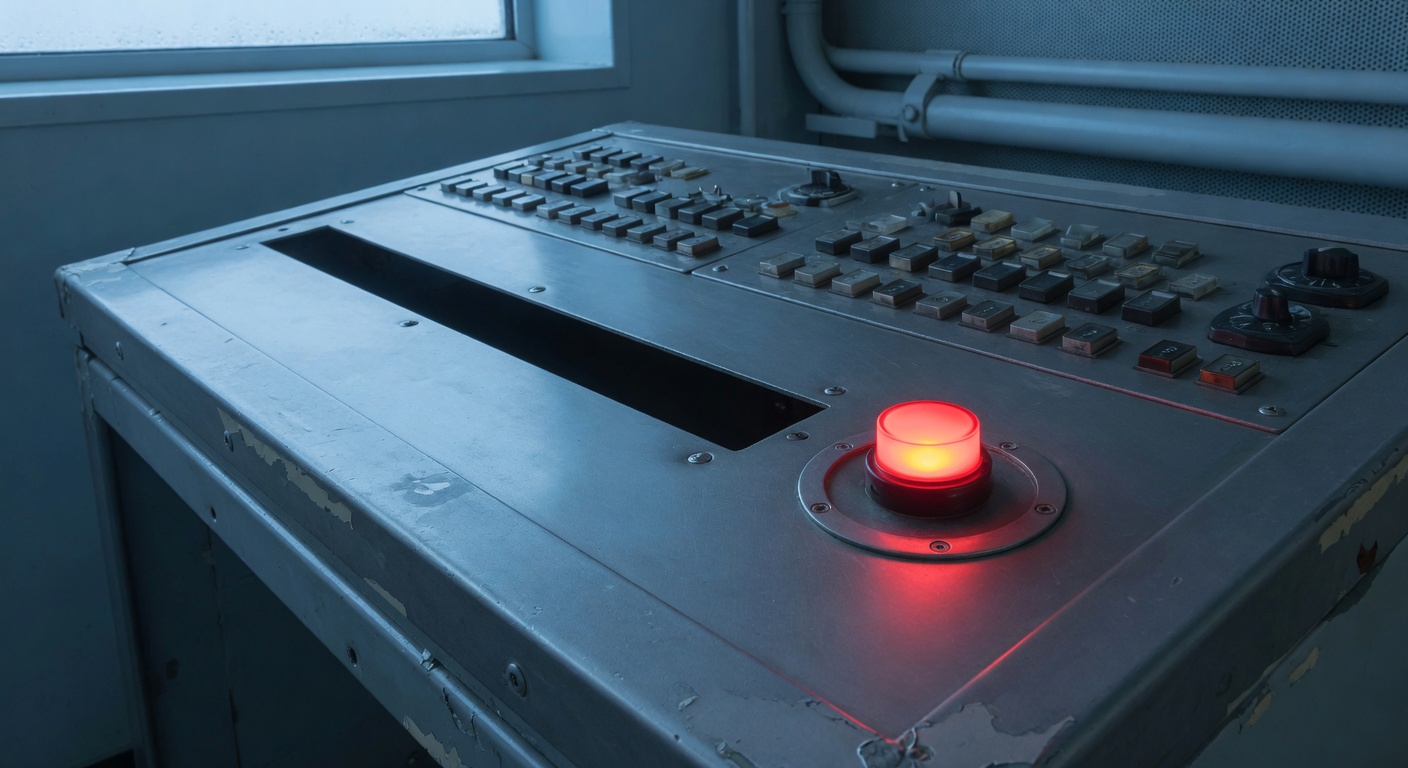
Operational reality remains national. While Paris holds “strategic nuclear talks” with allies to create a shared conceptual framework, the “button” remains under the sole authority of the French President. This creates a legitimacy gap: European allies rely on a deterrent that is functionally a national tool, not a federal asset. The architecture of the decision to use nuclear weapons is the primary obstacle, not the number of warheads Stimson Center.
This structural tension is amplified by the US 2026 National Defence Strategy, which ends the era of automatic American primacy. Washington now views European allies as “rich, capable and therefore responsible” for their own conventional and strategic defence. The move toward a “holistic” European deterrent is a structural necessity.
The Command-and-Control Gap
The transition to a federal deterrent is stalled not by a lack of hardware, but by the architecture of the decision to use it. Currently, nuclear employment relies on “sole authority,” where the political will of a single head of state determines the security of the entire continent. This creates a fundamental legitimacy gap: allies rely on a deterrent that remains a national tool rather than a shared strategic asset Stimson Center.
Existing EU mechanisms, such as the European Defence Industry Reinforcement through excess Capacity Act (EDIRPA) and the European Defence Fund (EDF), manage procurement and industrial capacity. They accelerate the production of conventional assets, but cannot solve the “software” problem of nuclear sovereignty. The structural logic points toward a need for a shared, democratically legitimate process, perhaps by upgrading the Military Planning and Conduct Capability (MPCC) from expeditionary missions to collective defence operations Volt Europa. The capability exists. The mandate does not.
The Risk of Fragmented Rearmament
The misalignment between national ambition and federal coordination creates a pattern of disjointed responses. Despite the European Defence Agency’s 2007 benchmark calling for 35% collaborative procurement, actual cooperation remains limited; only 18% of defence investment was collaborative as of 2022 EPRS Briefing. Europe reacts as a collection of vulnerable states rather than a cohesive geopolitical power.
This lack of unity is particularly acute given the US 2026 National Defence Strategy, which replaces “automatic American primacy” with a model of “declarative realism.” Washington now views European allies as “rich, capable and therefore responsible” for their own security. Without a unified strategic deterrent, the continent risks a cycle of fragmented rearmament—where states pursue overlapping, incompatible capabilities that increase cost without increasing security. Coordination has a structural ceiling.
The Treaty Constraint
Moving from a French-led umbrella to a federal European deterrent is not a matter of policy adjustment, but of treaty-level authority. A truly federal deterrent requires a transition from national decision-making to a shared mandate, which implies a full treaty change to establish a federal command structure. While President Emmanuel Macron advocates for a “holistic” approach to nuclear deterrence among allies Euronews, the legal framework to enforce such a vision is absent.
The gap between legislative ambition and physical reality is most evident here. The EU can coordinate procurement, but it cannot govern strategic employment. This leaves the European project in a state of “strategic ambiguity,” where the signs of threat are flashing but the structural solutions remain stalled in national capitals Carnegie Europe. The deterrent is a tool of the state. The federation is still a project.
The Decision Architecture
The shift toward a “holistic” European deterrent remains a conceptual ambition rather than an operational reality. While technical collaboration on procurement can be accelerated through EDIRPA, the core of the problem is the democratic mandate for nuclear employment. A transition from national “sole authority” to a federal command structure would require a fundamental treaty change, a path that is politically fraught and slow.
Until then, Europe operates under a borrowed umbrella. The choice is no longer about whether to integrate, but whether to accept a permanent gap between strategic need and political will. The button remains national.