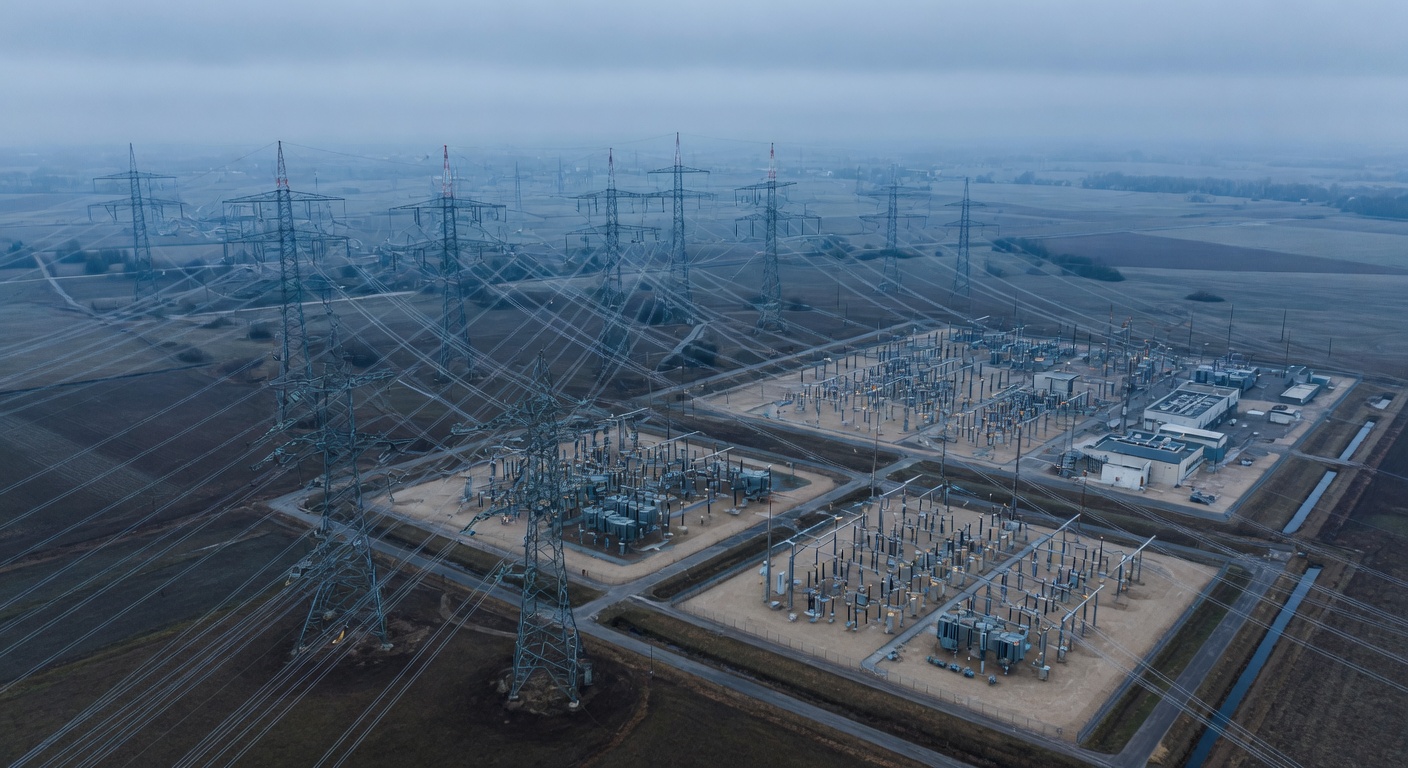
The European Grids Package (COM/2025/1005) transforms the EU energy grid from a collection of national assets into a single strategic instrument, yet it cannot override the legal shield of Article 4(2) TEU.
The Shift from Coordination to Alignment
The European Commission has moved beyond the voluntary coordination of the 2009 Third Energy Package. With the introduction of Binding Grid Integration Targets (BGITs), the EU now requires member states to align their national ten-year network development plans (TYNDP) with a centralized European strategy. The European Grid Observatorium tracks real-time capacity and bottlenecks to identify where national interests obstruct systemic stability.
This legislative push responds to the systemic vulnerabilities exposed by the recent closure of the Strait of Hormuz. While the “AccelerateEU” plan managed the immediate volatility of jet fuel and diesel supplies, the Carnegie Endowment for International Peace notes that the EU remains in “reaction mode.” The gap between short-term emergency measures and long-term structural autonomy is the physical manifestation of the Sovereignty Gap.
The institutional logic, reinforced by the Letta and Draghi reports, treats the energy market as a strategic asset rather than a commercial one. By rebranding the energy transition from “climate policy” to “competitiveness policy,” the Commission is attempting to bypass the “greenlash” and voter fatigue. Through the Industrial Accelerator Act, the grid is now framed as a strategic fortification, utilizing “made in Europe” quotas to secure critical infrastructure. The architecture for a federal energy system is now in place. The political will to enforce it is not.
The Legislative Architecture of Alignment
The transition from the 2009 Third Energy Package to the current European Grids Package (COM/2025/1005) represents a shift in the EU’s fundamental approach to infrastructure. Previous efforts relied on voluntary coordination; the new framework introduces Binding Grid Integration Targets (BGITs) that force member states to align national ten-year network development plans (TYNDP) with a centralized European strategy. This alignment is monitored by the European Grid Observatorium, which identifies where national interests create systemic bottlenecks.
To resolve the financial friction of cross-border projects, the Commission has deployed funding mechanisms to subsidize interconnectors that would otherwise be blocked by restrictive national cost-benefit analyses. Strategic Energy Corridors (SECs) are designed to possess a priority legal status, allowing the EU to expedite construction in designated emergency infrastructure zones. The exact scope of zoning overrides remains a point of legal contention. The Florence School of Regulation describes this as the most significant legal shift in EU energy law in nearly two decades.
The legal tools are comprehensive. The institutional authority remains contested.
The Integrationist and Deregulationist Divide
A clear ideological fault line has emerged between member states. “Integrationists,” led by France, Germany, and the Benelux countries, advocate for a centrally coordinated “European Supergrid” and the expansion of federalized investment tools. Their objective is to treat the European energy market as a single strategic asset, as suggested by the Letta and Draghi reports.
Conversely, “Deregulationists”—most notably Poland and Hungary—view the BGITs as regulatory overreach. These states argue that centralized targets threaten national price stability and ignore the specificities of their national energy mixes. Poland and Hungary have expressed skepticism toward centralized solidarity investment mechanisms, claiming they serve the industrial core of Europe while imposing disproportionate burdens on the periphery.
This friction reaches a structural ceiling at Article 4(2) of the Treaty on European Union (TEU). When a member state invokes “national security” as an application of the clause protecting national identities, the EU’s alignment tools lose their efficacy. The EPRS Briefing confirms that the gap between legislative ambition and physical reality is not an engineering failure, but a manifestation of this political friction.
From Climate Policy to Competitiveness Logic
The current push for integration is a response to the failure of reactive policy. The closure of the Strait of Hormuz demonstrated that the EU’s Sovereignty Gap is physically anchored in fragmented grids that cannot support the scale of renewables or strategic fuel-swapping. While the “AccelerateEU” plan addressed immediate volatility, the Carnegie Endowment for International Peace argues that without strategic foresight, Europe remains in a permanent state of reaction.
This has led to a fundamental rebranding of the energy transition. No longer framed purely as “climate policy” for environmental stewardship, the transition is now presented as a matter of strategic competitiveness. This shift is designed to bypass the “greenlash” and industrial anxiety by framing the grid as a strategic fortification. The Lowy Institute notes that green energy is now viewed as a form of geopolitical hard power.
Under the Industrial Accelerator Act, this logic manifests in “made in Europe” quotas for critical infrastructure. The energy transition has moved from a moral imperative to a strategic one. The stakes have shifted from degrees of warming to the viability of the European industrial base.
The Governance Ceiling
The transition from climate policy to competitiveness logic provides the Commission with a powerful narrative, but it does not rewrite the treaties. As long as national security interpretations of Article 4(2) TEU remain the ultimate veto, the European Grids Package can only align goals, not compel construction. The 2026 review will likely reveal that the technical architecture of a federal energy system is complete, while the political architecture remains fragmented. The choice is no longer about whether the tools exist, but whether the EU is willing to move from coordination to authority. The ceiling is political.