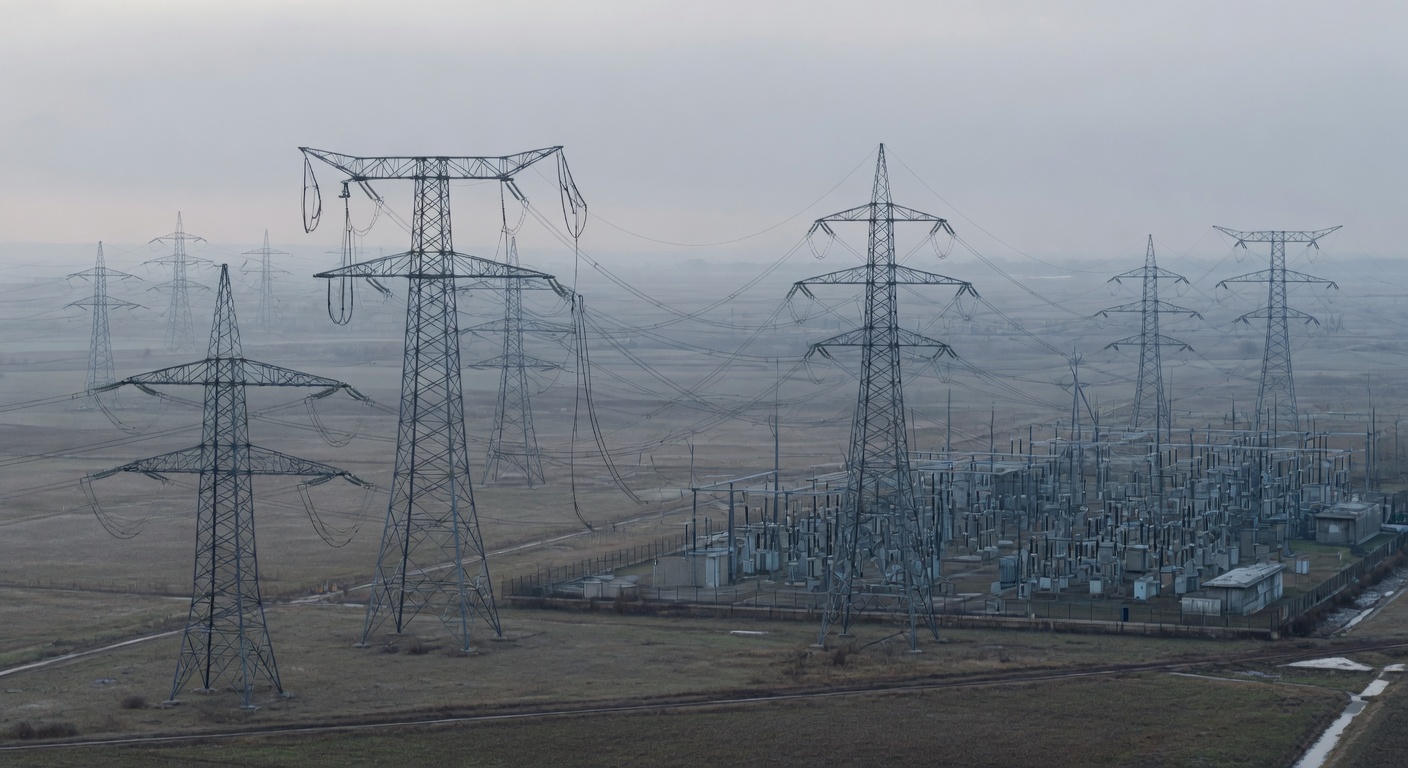
The AccelerateEU plan, presented on 22 April 2026, treats the European energy grid as a strategic asset equivalent to a missile defence shield. Its goal is total electrification to secure the continent against external volatility, yet a faction of member states clinging to “resource-realism” currently blocks the path.
The Collision of Two Sovereignties
The political row in Brussels is not a debate over climate targets, but a conflict over the nature of state survival. On one side stands the federalist drive for a centralized, integrated grid—the core of the AccelerateEU initiative. This approach argues that only total electrification can sever remaining dependencies on external powers. On the other is the “resource-realist” opposition, led by MEP Paolo Borchia of the Lega and the Patriots Group, who reject this model as “strongly ideological.” Borchia and his allies argue for the exploitation of Europe’s own unexplored fossil fuel resources, viewing federal integration as an infringement on national industrial autonomy.
This friction is compounded by a structural “lock-in” effect. As detailed in a European Parliament briefing, systemic macroeconomic and institutional barriers keep member states tethered to legacy energy architectures. While the April 2026 Council conclusions define a new diplomatic framework for energy sovereignty, the reality remains fragmented. Member states continue to sign long-term LNG contracts with Qatar and Azerbaijan, treating gas as a necessary transitional fuel even as the center manages its decline.
The result is a political truce rather than a strategic roadmap. The current 42.5% to 45% renewable energy target reflects a calibrated compromise designed to keep reluctant capitals on board. The gap persists not because technical solutions are missing, but because the political will to surrender national energy control to a federal authority is not.
The Legal Framework of Managed Decline
The structural tension in European energy governance is anchored in the evolution of the Hydrocarbon Directive (94/22/EC). Originally a tool for market expansion, the directive now serves as a mechanism for “managed decline.” Member states leverage Article 2.2 to restrict exploration licenses under the guise of “public interest” to meet 2050 climate neutrality targets. This legal pivot integrates with the Net-Zero Industry Act (Regulation 2024/1735), which requires operators to prove their capacity for decommissioning or repurposing fields for Carbon Capture and Storage (CCS) and geothermal energy.
However, national strategic interests frequently bypass this architecture. While the center pushes for a unified transition, Germany and Italy continue to treat gas as a “necessary transitional fuel,” securing long-term LNG contracts with Qatar or Azerbaijan. This creates a two-tier multilateralism: a high-level EU consensus on climate neutrality coexisting with fragmented, national-level energy procurement. The legal tools for transition exist. The political unity to enforce them does not.
The Resource-Realist Fault Line
The opposition to the AccelerateEU plan is led by a “resource-realist” faction, most prominently represented by MEP Paolo Borchia. Borchia rejects the federalist drive for total electrification as “strongly ideological,” arguing instead for the exploitation of Europe’s own unexplored fossil fuel resources. This position is not an environmental disagreement but a demand for national industrial autonomy. Borchia calls for exemptions from the Stability Pact to support households and businesses without the constraints of the Green Deal.
This internal divide is mirrored in renewable targets. The current 42.5% to 45% renewable energy target by 2030 is a political truce. Analysis by the Middle East Observer suggests that heavy industry in the steel and chemical sectors successfully pushed for a “diversified” approach, treating these targets as flexible ranges to allow LNG to prevent industrial collapse. Sovereignty is being traded for short-term stability.
The Rhetorical Shift to Strategic Competitiveness
The legitimacy of federal energy intervention is undergoing a fundamental rebranding. As analyzed by the Lowy Institute, the discourse has shifted from “climate policy”—a moral identity—to “strategic competitiveness.” By framing the energy grid as a strategic asset equivalent to a “missile defence shield,” the EU seeks to bypass the “greenlash” of farmer protests and industrial anxiety. This elevation of energy policy to the level of national security provides the political cover necessary to justify massive federal interventions, such as the proposed €2 trillion budget.
This shift is operationalized through the proposed Industrial Accelerator Act, which mandates “made in Europe” quotas for critical infrastructure and streamlines permitting processes from years to weeks. The goal is to shield the continent against Chinese dominance in PV and wind components and US protectionism. The structural logic suggests that when a policy faces a domestic political dead-end, it is elevated to the level of security. The transition is no longer about saving the planet. It is about the competitiveness of the state.
The Sovereignty Threshold
The elevation of the energy grid to a security asset provides a temporary political bypass, but it does not resolve the underlying structural friction. Treating electrification as a security imperative allows the center to push through budgets and permitting, yet the “resource-realist” opposition remains rooted in the administrative identity of the member states. A truly integrated energy union would require the surrender of national procurement and resource control to a federal authority. This transition remains a long path, necessitating treaty changes that the current political truce is not designed to handle. The gap is no longer technical. It is constitutional.
Sources
- www.europarl.europa.eu
- www.eunews.it
- www.consilium.europa.eu
- Factual baseline of wind/solar vs fossil to ground the political arguments.
- Strategic analysis of why electrification is the only viable path to security.
- Analysis of industrial pressure and the 42.5-45% target.
- Analysis of the rhetorical shift from “climate” to “survival”.