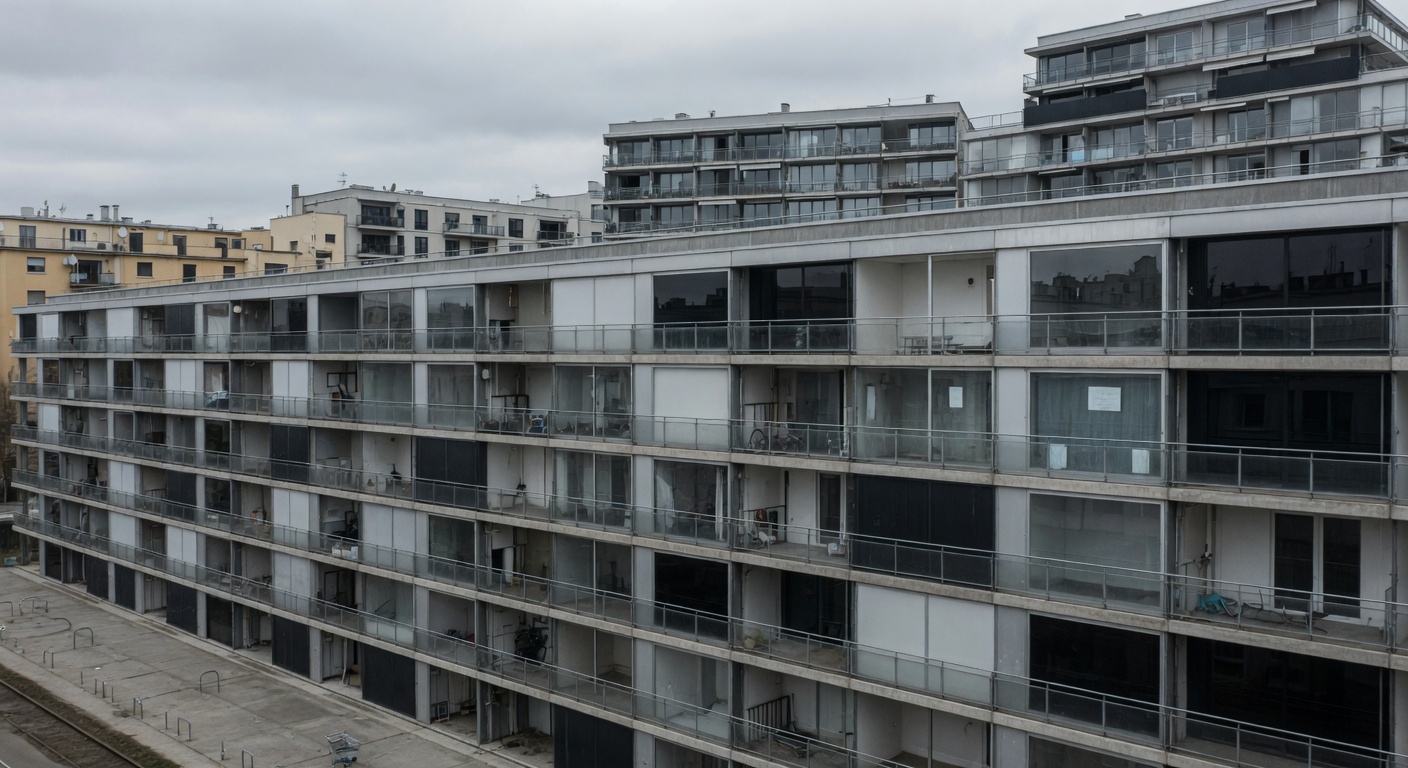
Since 2010, house prices across the European Union have surged by more than 55 per cent, transforming essential shelter into a speculative asset class that locks a generation out of adulthood.
The GDP Blindspot and the Well-being Pivot
The European Union is shifting its economic compass from the narrow aggregation of GDP toward a multi-dimensional framework of “well-being.” This pivot uses the OECD Better Life Index—tracking housing, work-life balance, and civic engagement—and Eurostat’s quality-of-life indicators to measure outcomes rather than mere outputs. The structural logic is clear: in an ageing society, economic success depends on the resilience of the lifecycle, not the volume of production.
To bridge this gap, the European Commission launched the TSI 2025 Flagship project to tackle demographic change by integrating skills, labour market resilience, and social inclusion. This model treats demographic stability as a strategic asset, attempting to maintain competitiveness by removing barriers for youth and women.
The ambition of the 2025 flagship project is colliding with a physical reality. In several member states, the cost of purchasing a home has more than tripled in fifteen years. In certain regions, young renters spend 60–70 per cent of their income on housing Social Europe. A well-being economy cannot be built on a foundation of speculative real estate.
The Financialisation of Essential Infrastructure
The transition to a well-being economy is a conflict over the nature of housing. Since 2010, house prices across the European Union have surged by more than 55 per cent, while rents have risen by nearly 27 per cent Social Europe. This reflects a structural shift: property has been decoupled from its role as social infrastructure and rebranded as a speculative asset class. The resulting supply gap meant that by late 2025, new housing met only half of the actual demand.
The S&D Group has proposed a European Affordable Housing Plan to redefine the fiscal boundaries of the state. A central pillar is the revision of state-aid rules (SGEI) to allow member states to intervene in the rental market for middle-income households without triggering EU competition penalties. Some argue that housing investment should be treated as a strategic public investment, exempt from the constraints of the Stability and Growth Pact. The pattern suggests that housing is no longer a market externality but a core component of demographic resilience. The financialisation is complete. The correction is only beginning.
The Demographic Divide and Internal Friction
A stark demographic divergence complicates the EU’s well-being strategy. While the entire continent is ageing, the impact is not uniform. Eastern and Southern member states face the sharpest population declines, driven by natural decrease and limited net inward migration Bruegel. This creates structural friction; the “well-being” needs of a shrinking village in Bulgaria differ fundamentally from those of a hyper-dense metropolis in Germany.
This divide extends into the labour market. EPRS documents suggest the shrinking working-age population is a significant risk across the bloc, threatening the coherence of the Single Market EPRS. The ECFR frames the completion of the Single Market and strategic enlargement not as political choices, but as demographic necessities to maintain scale and geopolitical weight ECFR. Scale is the only structural hedge against decline.
The Lifecycle Model and the Policy Lag
The TSI 2025 Flagship project attempts to move beyond fragmented social policy toward a “lifecycle” support model. This framework targets four pillars—parents, youth, seniors, and migrants—to maintain labour participation by removing structural barriers for women and young people. It is an attempt to align the 2024 Draghi Report’s focus on competitiveness with the human realities of an ageing population.
A persistent lag exists between these flagship projects and the legislative tools required to enforce them. Proposals to ban “Golden Visas” or restrict overseas speculative real estate purchases run directly into the EU’s foundational principles of the free movement of capital. The tension is between the desire for a human-centered economy and the legal architecture of a neoliberal market. The tools of the 20th century cannot govern the demographic crises of the 21st.
The Limit of the Market Model
The transition to a human-centered economy depends on whether the EU can reconcile its social ambitions with its legal architecture. While the TSI 2025 project and the proposed Affordable Housing Plan signal a shift toward lifecycle resilience, they remain constrained by the foundational rules of the Single Market. Decoupling housing from speculative capital would require more than a policy shift; it would require a fundamental renegotiation of the free movement of capital. Until that tension is resolved, the well-being economy remains a measurement exercise. The structural gap persists.