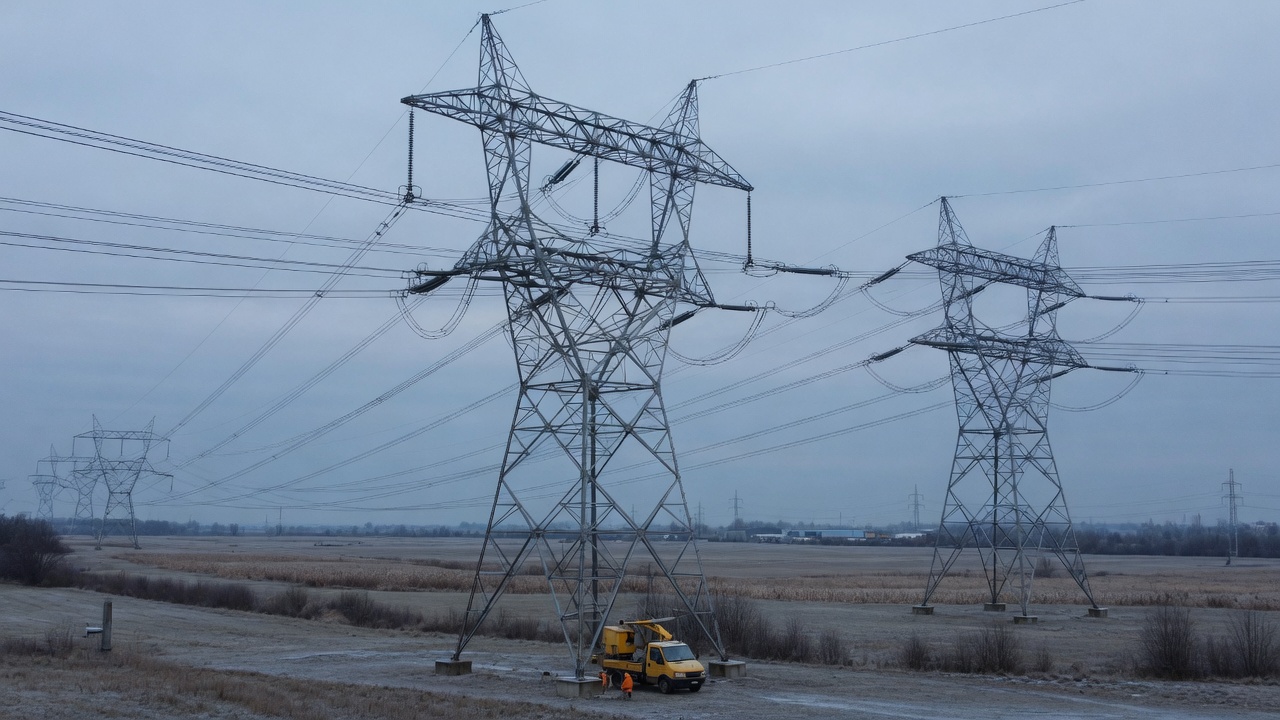
The European Commission’s “AccelerateEU” strategy demands an annual investment of €660 billion until 2030, yet its success depends on a “tacit approval” mechanism for grid permits that member states view as a direct assault on national sovereignty.
The Friction of Financial Mobilization
The Commission’s strategy (COM/2026/116) shifts the focus from regulatory coordination to aggressive financial mobilization. To bridge a funding gap estimated at €750 billion, Commissioner Dan Jørgensen proposed leveraging over €75 billion in financing from the European Investment Bank and establishing a Strategic Infrastructure Investment (SII) Fund to provide equity directly to electricity grid operators European Commission. The logic is diagnostic: the Hormuz crisis proved that European sovereignty is theoretical if the physical grid cannot absorb new generation.
This “Investment-First” approach has triggered a political row in Brussels. While the Commission pushes for faster grid permits through a silent approval process—where projects are automatically cleared if national authorities fail to respond—member states, coordinated via the Cyprus Presidency, have labeled the move a “Brussels power grab” Euronews. The tension is not about the money. It is about the governance of the wires.
This structural friction extends to the Energy Market Design (EMD). Seven countries, including the Netherlands and Sweden, formally warned that interfering with price formation mechanisms would create regulatory uncertainty Reuters. The result is a contradiction: the Union possesses the financial blueprints for energy independence, but lacks the political architecture to deploy them.
The Financial Architecture of AccelerateEU
The Commission’s strategy (COM/2026/116) treats the energy transition not as a regulatory challenge, but as a capital deployment problem. The target is specific: an annual investment of €660 billion until 2030, rising to €695 billion between 2031 and 2040 European Commission. To address the funding gap, the European Investment Bank Group will provide over €75 billion in financing over three years, while the new Strategic Infrastructure Investment (SII) Fund provides equity directly to grid operators.
This shift toward “de-risking” aims to attract private capital by using public funds as a catalyst. The establishment of an Energy Transition Investment Council aligns policy with the needs of private investors, while a €500 million pilot for “energy efficiency as a service” models targets the demand side European Commission. The structural logic is clear: the Union cannot afford the transition through budgets alone. It must reengineer its capital markets.
The financial blueprints are comprehensive. However, they remain decoupled from the legal authority to enforce them across borders.
The Fault Lines of Sovereignty
The “AccelerateEU” plan has exposed a divide within the European Parliament and the Council, revealing that “sovereignty” is interpreted differently across the political spectrum. The Patriots Group and Lega, led by MEP Paolo Borchia, reject the focus on total electrification as ideological, arguing that a system based solely on renewables is unrealistic and that Europe should exploit its own fossil fuel resources Research Report.
Conversely, the left-wing opposition, including the Five Star Movement and the European Environmental Bureau, dismisses the strategy as “hot air.” They cite a lack of new public investment and the Commission’s refusal to create a centralized EU framework for taxing energy windfall profits—an amount T&E estimates at €37 billion Research Report.
Beyond this ideological clash, a pragmatic bloc of seven countries—including the Netherlands, Sweden, Denmark, Finland, Latvia, Luxembourg, and Portugal—resists market integration. These states formally warned that interfering with the merit-order price system of the Energy Market Design (EMD) would create regulatory uncertainty and harm competitiveness Reuters. They argue that high prices are a symptom of gas dependency, not a failure of market design.
The result is a fragmented front where coordination happens only in the shadows of national interest.
The Material Legacy of the Hormuz Crisis
The current push for centralized investment is a direct response to the closure of the Strait of Hormuz, which served as a systemic stress test for European energy. This crisis revealed that sovereignty is a theoretical concept if the physical grid cannot absorb new generation. This has led to an analytical shift toward the “material foundation” of sovereignty: the transmission and distribution infrastructure Brussels Diplomatic.
The Commission’s proposal for “tacit approval” of grid permits—where projects are automatically cleared if national authorities remain silent—is an attempt to bypass these systemic bottlenecks. Member states, coordinated through the Cyprus Presidency, view this as a “Brussels power grab” and an infringement on national control over critical infrastructure Euronews.
The tension reflects a recurring European pattern: the desire for the benefits of a single market without the governance of a single authority. The grid is the final frontier of this friction.
The Governance Ceiling
The AccelerateEU strategy reveals that Europe’s energy transition is no longer limited by technology or the availability of capital, but by the persistence of the national veto. The Commission can mobilize billions via the EIB and the SII Fund, but it cannot unilaterally rewrite the administrative laws of twenty-seven different capitals. Attempting to automate permits through tacit approval is an effort to legislate around a political deadlock.
The pattern suggests that the Union has reached a governance ceiling. Until the Union moves from a model of coordinated national grids to a single federal energy authority, the gap between financial ambition and physical reality will persist. The bottleneck is political.
Sources
- energy.ec.europa.eu
- www.eunews.it
- Evidence of member state resistance (NL, SE) to centralized market design.
- Analysis of the tension between grid acceleration and national sovereignty.
- Geopolitical context of the Hormuz crisis.
- Analytical framing of energy as a material foundation of sovereignty.
- Critical perspective on competitiveness and remaining exposure.