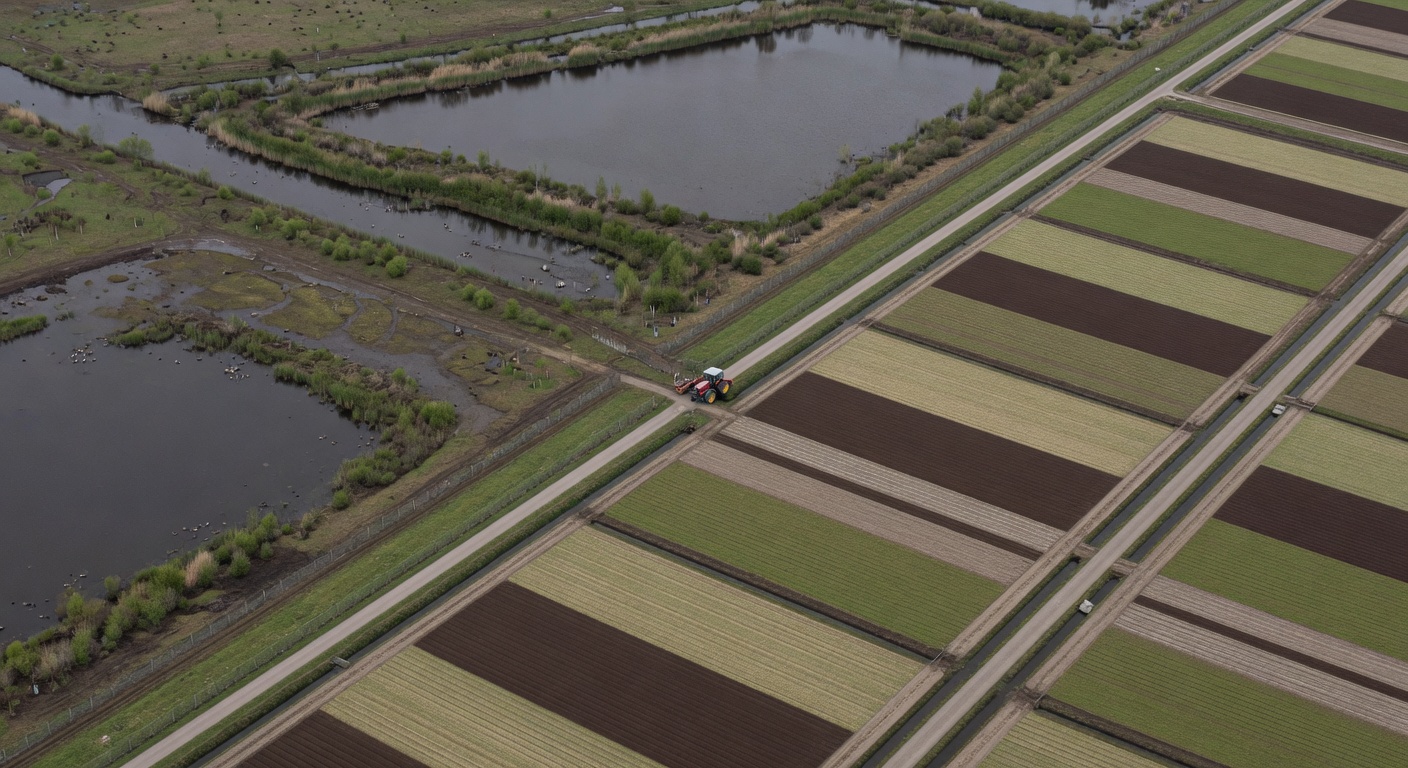
EU Member States must adopt National Restoration Plans (NRPs) by 2026. This transition of the Nature Restoration Law from a legal mandate to a political battlefield reveals a structural friction point: the distance between Brussels’ ecological ambitions and national land-use realities.
The 2026 Deadline and the Implementation Friction
Under the Nature Restoration Regulation, the 2026 deadline is the point where the EU’s biodiversity strategy meets the reality of national property rights and agricultural policy. These plans are not administrative exercises; they are binding blueprints detailing specific measures and timelines for restoring degraded ecosystems.
This transition has triggered political friction. In Austria, Environment Minister Leonore Gewessler is fighting a battle against coalition opposition from the right-wing ÖVP, who view these mandates as infringements on national sovereignty Politico. Simultaneously, grassroots resistance is mounting in Poland, where beekeepers and agricultural groups frame the restoration targets as external impositions that threaten rural livelihoods Euractiv.
The tension is structural. The EU is attempting to enforce a green mandate across twenty-seven diverse political landscapes without a unified financial mechanism to offset the costs of land-use transition. The result is a pincer movement of opposition: top-down ministerial conflict and bottom-up populist pushback. Coordination fails where the law ends and politics begins.
The Funding Mismatch and the Investment Risk
The legal mandate of the Nature Restoration Law is colliding with a funding deficit that forces Member States into a precarious investment trade-off. Analysis by Bruegel suggests states face a choice between a cost-efficiency route and a carbon sequestration route. Prioritizing the cheapest measures reduces short-term costs but creates a long-term risk. By delaying high-impact restoration projects, the EU allows habitats to degrade further, which the data suggests will lead to a cost spike after 2040.
This constraint is compounded by land ownership. In Germany and Spain, where private land ownership is high, the state must provide significant subsidies to incentivize compliance. In contrast, the Netherlands, with higher public landholdings, faces a simpler investment path. Ecological success depends more on national land-tenure systems than on the legal text of the regulation. The funding mismatch is structural.
Political Fault Lines and the Sovereignty Clash
The 2026 National Restoration Plans have transformed environmental policy into a battle over agricultural sovereignty. Ecological goals are now framed as threats to national autonomy. In Austria, Environment Minister Leonore Gewessler faces intense opposition from the right-wing ÖVP Politico.
At the grassroots level, the opposition is cultural. In Poland, beekeepers and agricultural groups push back against land-use restrictions, framing the nature plan as an external imposition on rural identity Euractiv. This is not a dispute over biodiversity science, but a clash over land control. The EU is projecting a centralized ecological vision onto a decentralized political reality. The friction is systemic.
Legislative Weakening and the Industrial Pivot
To ensure the law’s survival, the Nature Restoration Law underwent a process of weakening that traded structural necessity for political viability. NGOs, including ClientEarth and BirdLife Europe, describe the final text as a “shell of a law” EEB. Critical targets for peatland and agricultural land restoration were deleted, and the right of access to justice under Article 16 was removed. Most crucially, the law now allows “socioeconomic reasons” and “food security” assessments to justify delaying implementation.
The European Commission is attempting to reconcile these contradictions through the Clean Industrial Deal. By reframing the Green Deal as an industrial strategy, the Commission aims to pivot “nature-positive” transitions from regulatory burdens into drivers of growth and strategic autonomy. However, a tension remains: the industrial framework seeks competitiveness, while the restoration law seeks ecological integrity. The compromise has reduced the law’s enforcement power.
The Sovereignty of the Soil
The 2026 National Restoration Plans will reveal whether the Nature Restoration Law is a structural shift or a legislative exercise in optimism. By allowing “socioeconomic reasons” to delay targets, the EU has built a safety valve that Member States are already using. This ensures the law survives the current political climate, but it risks institutionalizing the implementation gap. The question is no longer about the legality of the mandate, but about the physical capacity of the European state to manage land use across borders. The friction is now concrete.
Sources
- The primary legal text defining the 2026 National Restoration Plan requirements.
- www.politico.eu
- www.bruegel.org
- The overarching framework for balancing decarbonisation and industry.
- Concrete example of national/grassroots pushback in Poland.
- Critical NGO perspective on the legislative weakening of the law.
- Baseline data on biodiversity failures and successes.