Russia has transitioned its national economy into a permanent war machine, utilizing a decentralized network of ‘shadow fleets’ and hybrid operations to systematically exhaust Western political resolve.
The Architecture of Exhaustion
The current conflict is not a conventional war with a defined end-state, but a calculated strategy of attrition. Russia employs a “shadow war” framework—characterized by the sabotage of critical infrastructure, the penetration of digital networks, and the deployment of hybrid platforms—to maintain a state of permanent instability across Europe. According to CEPA, these operations prioritize ambiguous attribution. This ensures Western states remain in a reactive posture, diverting intelligence and regulatory resources to defend against low-threshold threats.
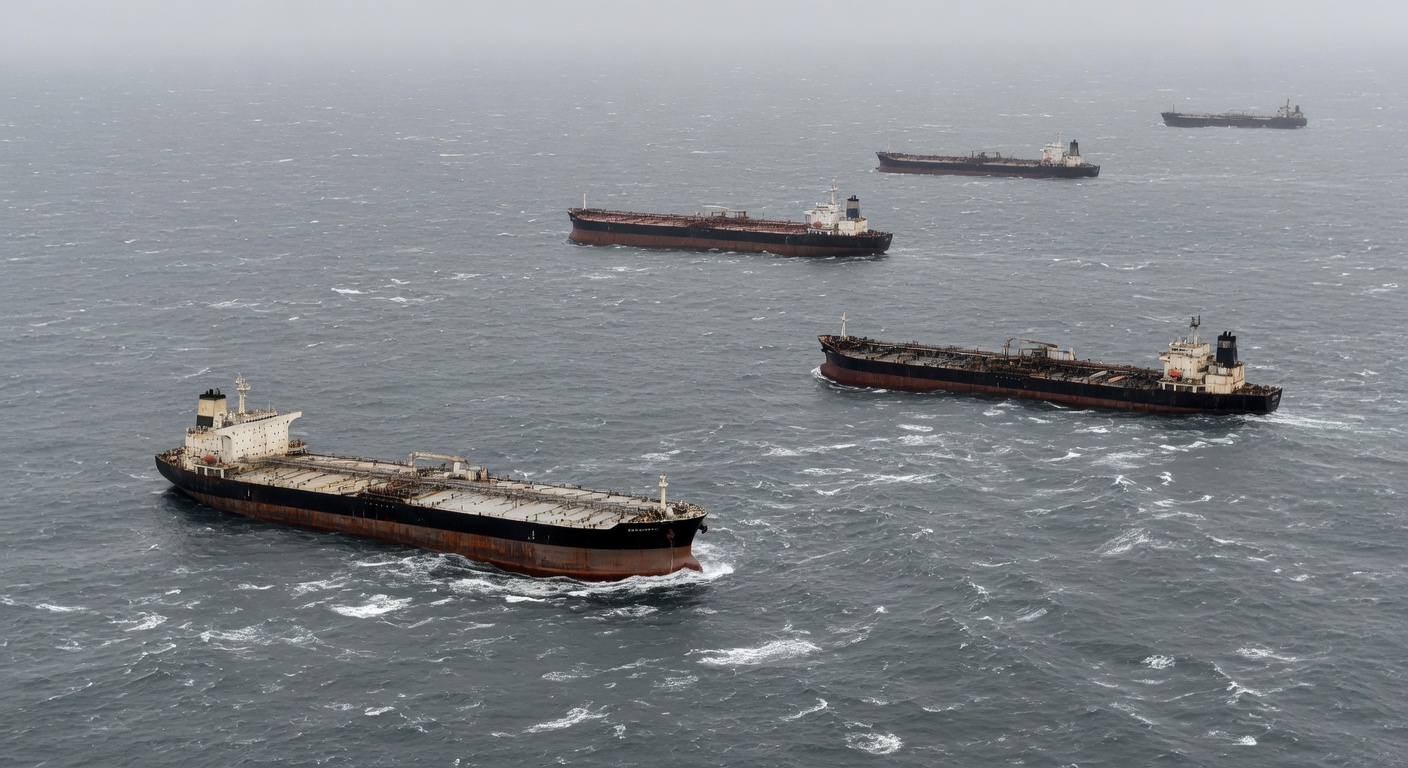
A primary tool in this strategy is the Russian “shadow fleet.” While ostensibly used to bypass oil sanctions, these vessels now function as hybrid warfare platforms. ACLED reports that these ships damage undersea cables and deploy drones over airports and military facilities in the Baltic and North Sea regions. A sanctions-evasion mechanism has become a direct instrument of strategic insecurity.
The structural mismatch is stark. Moscow operates on a multi-year horizon of total mobilization; the European Union remains tethered to fragmented electoral cycles and quarterly budgets. This “crisis management” mindset prevents the transition to a structural defense architecture capable of sustaining the estimated €100bn annual requirement for Ukraine’s defense and reconstruction over a five-year period—a figure cited in strategic briefings as a critical target. Coordination is currently an ad-hoc exercise. Governance remains an aspiration.
The Industrial Asymmetry
The Russian defense sector has transitioned from a commercial-industrial complex into a permanent war economy. This shift is not merely a surge in production, but a structural realignment of the state’s economic priorities. Moscow treats the conflict as a long-term strategic endeavor. While the West relies on fragmented industrial bases and quarterly budget cycles, Russia has institutionalized attrition. The resulting mismatch is not necessarily one of total output, but of temporal horizon.
The efficacy of Western sanctions has been dampened by the resilience of this war economy, supported by continued oil and gas purchases from India and China. Even the 19th sanctions package remains a gradual instrument in the face of a state that has already accepted the costs of total mobilization. As noted in the NATO report on Russian resilience, the Russian defense industry’s capacity for attrition is now the central pivot of their strategy. The West is fighting a war of budgets; Russia is fighting a war of existence. The structural gap is widening.
The Procurement Bottleneck
Europe’s capacity to outlast Russia is obstructed by a persistent institutional friction: defense procurement remains nationalized and fragmented. This prevents the scale and speed required for a centralized war economy, leaving the EU in a state of reactive crisis management. The financial requirement is concrete—approximately €100bn annually for Ukraine’s defense and reconstruction over a five-year horizon—but the mechanism to deliver this remains tethered to annual budget negotiations and electoral cycles.
This temporal mismatch creates a strategic vulnerability. When security is managed through ad-hoc support packages, the adversary can predict the points of political fatigue. According to ECFR, the structural logic points toward a long-term plan with sufficient resources to decouple support from political volatility. This requires a multi-year defense architecture that transcends national budget cycles, yet the political will to institutionalize such a system remains fragmented. Coordination is a tool; architecture is a requirement.
The Shift Toward Retaliation
For years, the European posture toward hybrid threats has been one of passive defense—absorbing attacks and hoping they subside. This era is ending. There is a documented doctrinal shift within NATO and the EU toward “deterrence by retaliation,” moving the goalpost from absorption to making hybrid operations costly and predictable. As analyzed by Politico, discussions now include measures previously considered unthinkable: offensive cyber operations targeting Russian state infrastructure and coordinated systemic economic shocks that go beyond the gradualism of traditional sanctions.
The objective is to change the cost-benefit analysis for the Kremlin. By utilizing NATO assets to actively disrupt hybrid platforms, such as the shadow fleet—which ACLED identifies as a platform for undersea cable damage and drone deployment—the West seeks to transform “low-cost, high-gain” operations into strategic liabilities. This transition from a reactive to a proactive posture is the only way to counter the “shadow war” described by CEPA. The tools for retaliation exist. The courage to use them is the current variable.
The Temporal Gap
The transition from passive defense to active retaliation is not a matter of capability, but of political synchronization. While the technical tools for counter-strikes in the digital and maritime domains are available, their deployment remains tethered to the slowest common denominator of national capitals. This creates a structural window for Russia to iterate its hybrid tactics faster than Europe can coordinate its responses. Moving beyond this cycle would require a permanent, multi-year security mandate that transcends electoral volatility. The choice is between a responsive alliance and a governing defense architecture. Coordination is not enough.
Sources
- cepa.org
- ecfr.eu
- Hard data on Russian defense industry resilience and attrition capacity.
- Details on the political shift toward more aggressive retaliatory measures.
- Technical details on the shadow fleet as a specific tool of hybrid warfare.
- Forward-looking patterns of escalation for 2026.
- www.disinfo.eu