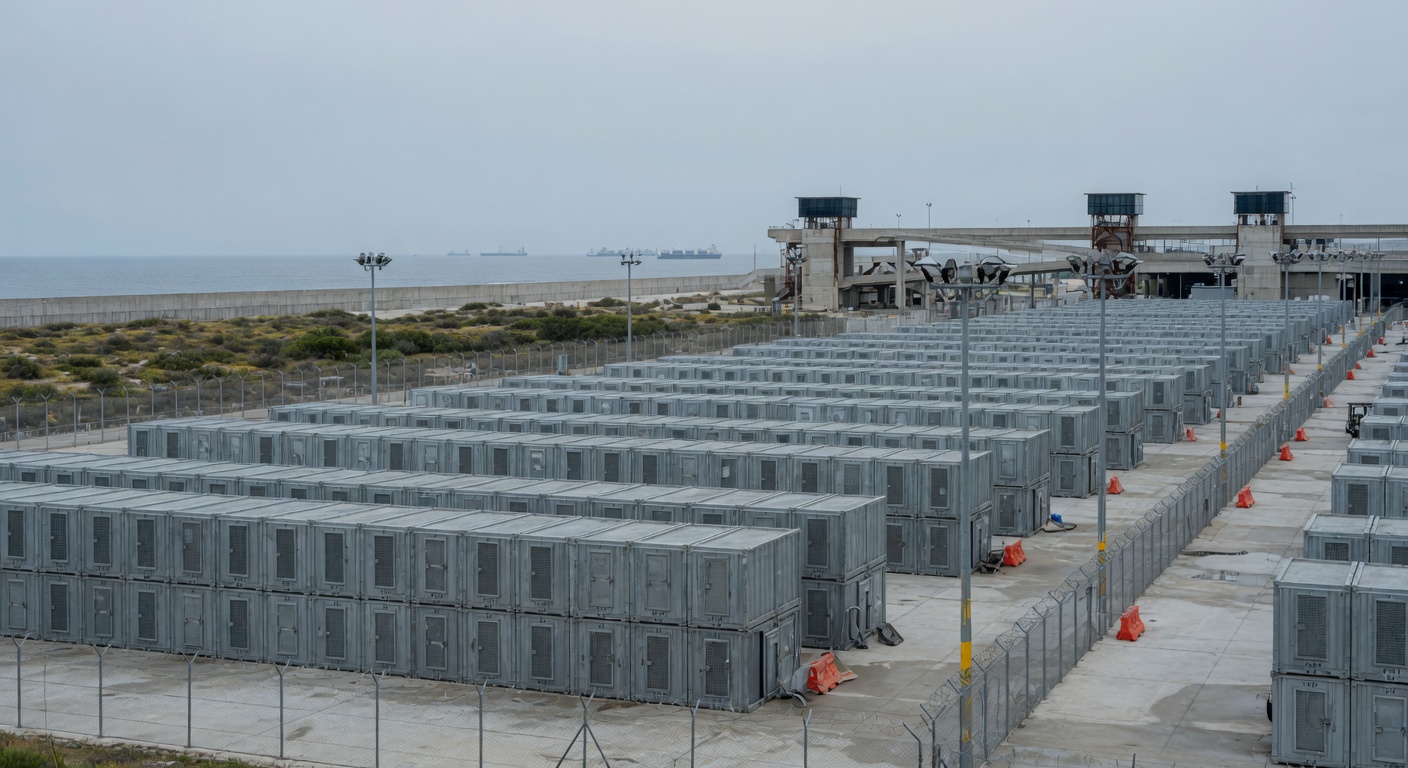
On June 1, 2026, EU ministers reached a provisional deal on a new “Return Regulation” that establishes processing and detention hubs outside EU territory. This operationalizes what some describe as a “global deportation machine.”
The June 1 Agreement and the Hub Model
The new “Return Regulation” creates facilities designed as final destinations for expelled migrants or transfer centers for repatriation. This effectively creates a buffer zone that shifts the burden of enforcement away from the Schengen area’s internal perimeter. The shift follows the “New strategies on migration and EU visa” announced by the European Commission on January 29, 2026, which prioritizes border security and the integrity of the borderless zone European Commission.
The logic is diagnostic. With deportation rates currently below 30%, the EU is attempting to resolve a structural contradiction: the difficulty of maintaining internal borderless travel without a ruthlessly efficient external deportation mechanism. By outsourcing detention to third countries, the EU seeks to bypass the legal and political frictions of domestic deportation processes Euronews.
This transition relies on a “solidarity pool” financial mechanism. Member states can now buy their way out of asylum seeker relocations at a cost of €20,000 per person InfoMigrants. The political conflict over burden-sharing has been converted into a financial transaction that funds the infrastructure of externalization.
The Enforcement Framework
Operationalizing return hubs is a core component of the “new migration reform plan for 2026” agreed upon by EU ministers. This framework is anchored in the January 29, 2026, Commission strategies, shifting focus from internal processing to the integrity of the external perimeter European Commission. Central to this shift is the expansion of the Frontex mandate. The 2026 review expects to grow the Standing Corps and broaden Frontex’s role in deportations, potentially allowing the agency to manage movements between non-EU countries to facilitate the hub system Statewatch.
This architecture creates a tiered system of enforcement. The Commission provides the strategic framing; Frontex acts as the coordinator; and third-country hubs provide the physical space for detention. This allows the EU to maintain a legal distance from the actual conditions of detention, creating zones where EU standards are bypassed RFI. The legal framework exists. The accountability mechanism does not.
The Solidarity Transaction
The deployment of these hubs is linked to the “Solidarity Pool,” a financial mechanism designed to resolve the deadlock over asylum seeker relocation. Under the EU Migration and Asylum Pact, member states must either accept migrants or contribute €20,000 per person to a pool supporting frontline states like Greece, Cyprus, Spain, and Italy InfoMigrants. This transforms a political and humanitarian obligation into a market transaction.
The fault lines remain deep. While Northern states have leveraged this financial flexibility to support stricter enforcement, other member states reject the framework entirely. Polish Prime Minister Donald Tusk stated that Poland will neither accept migrants under the Pact nor pay for them InfoMigrants. This resistance suggests a structural reality: the “Solidarity Pool” does not create consensus, it merely prices it.
The Outsourcing Precedent
The return hub model represents a shift from cooperation with third countries to a delegation of sovereign enforcement powers. Previous attempts to manage migration focused on bilateral readmission agreements and direct deportations, but these were hampered by low success rates—currently under 30%—and the legal complexities of domestic detention Euronews.
This evolution reflects a failure to establish a federal border authority with direct executive power over the Schengen perimeter. Instead of building a transparent, accountable European agency capable of managing borders within a unified legal framework, the EU has opted for a pragmatic workaround. By moving the machine of deportation outside its own territory, the Union attempts to preserve the internal borderless experience for its citizens while outsourcing the friction of its external security.
The Cost of Externalization
The shift to return hubs creates a persistent tension between the EU’s legal identity and its operational reality. By moving enforcement beyond its own borders, the Union avoids the political friction of domestic detention but inherits a systemic dependency on the stability and compliance of third-country regimes.
This is a pragmatic trade-off: the Schengen area’s internal fluidity is preserved by exporting its contradictions. The structural question remains whether a border can be truly secure if its enforcement is delegated to actors outside the Union’s legal reach. Acting as a collection of national interests, the EU can coordinate; acting as a federal entity, it could govern. The decision to outsource instead of integrate is now a concrete operational gap.