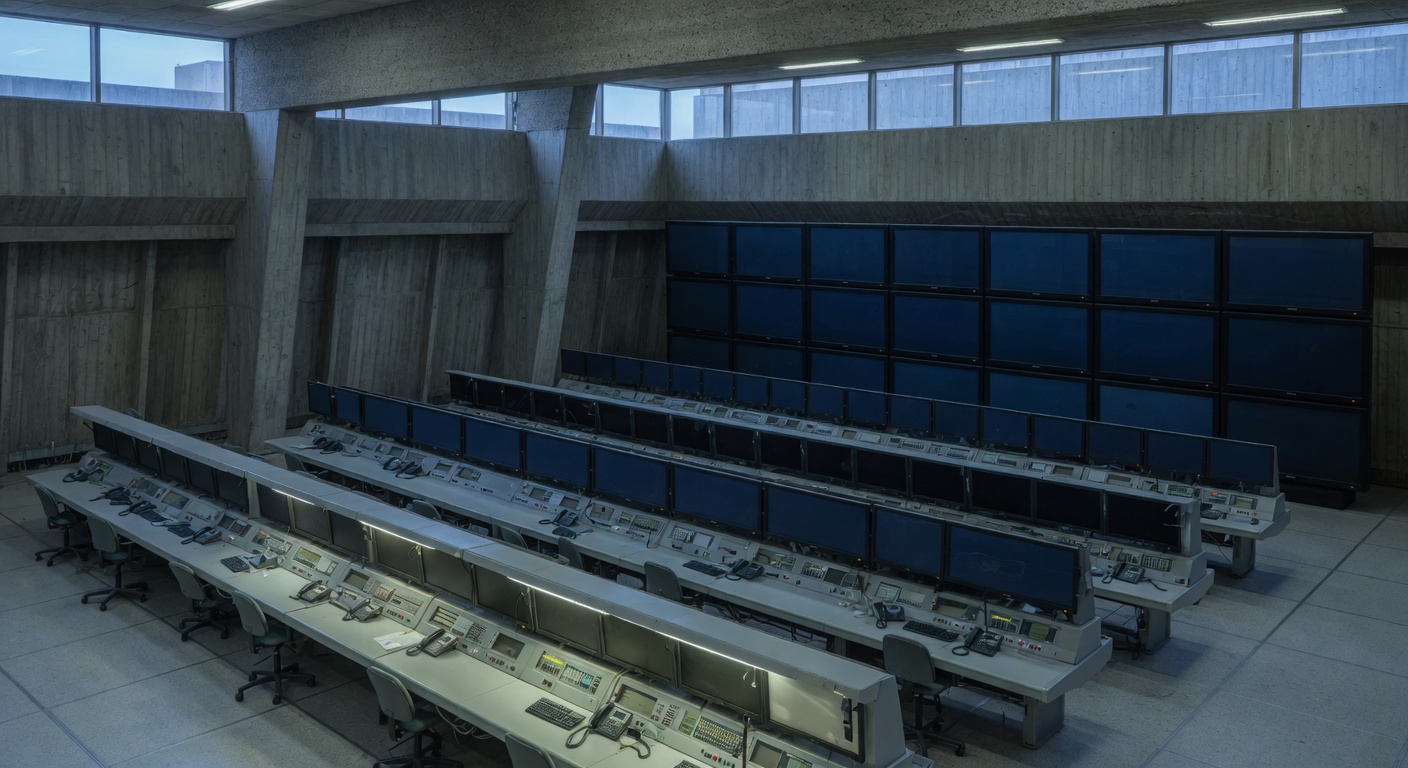
The European Commission is using financial commitments and new regulatory frameworks to secure a central role in military oversight, yet the EU continues to build a technical defence wall without a political bridge to a unified command.
The 2030 Readiness Framework
The Defence Readiness Roadmap 2030 shifts the EU from vague political coordination to a regime of “metrics and milestones.” By moving from a facilitator to an active manager, the Commission has introduced four “Readiness Flagships” to fill capability shortfalls by 2030. These include the European Drone Defence Initiative—a multi-layered network for neutralizing hostile drones targeted for initial operational capacity by 2026—and the Eastern Flank Watch, designed to integrate air defence and electronic warfare along the borders of Russia and Belarus by 2028.
This administrative centralization creates friction. While frontline states view these projects as existential necessities, capitals in Paris, Berlin, and Rome remain wary of Brussels encroaching on national defence prerogatives. This tension is evident in the institutional compromise regarding the annual progress review: member states insisted that the European Defence Agency (EDA), which remains under direct national control, lead the review process rather than the Commission.
The result is a fragmented architecture. The EU coordinates the funding of readiness through a dedicated defence commissioner and directorate-general, but it lacks the authority to execute high-end defence operations. Technical capability is growing. The political will to cede sovereign control remains static.
The NATO Dependency
The push for strategic autonomy currently collides with an operational reality: the EU lacks a unified command. Consequently, the Readiness Roadmap’s flagships are designed to be “complementary” to NATO, which preserves the dominance of US-led command and control (C2) structures. This creates a structural condition where the drive for independence reinforces the existing hierarchy.
The procurement cycle further complicates this autonomy. The urgency of the 2030 timeline has led some member states to prioritize the purchase of existing US hardware to achieve immediate readiness. This provides a short-term fix but deepens the industrial and technological dependencies the EU intends to reduce. The Commission manages the funding of readiness through budgets and milestones, but the execution of high-end defence remains tethered to Washington. The administrative layer is federal; the operational layer is not.
The Sovereignty Wall
The institutional friction over the Roadmap reveals a geopolitical split. Frontline states, including Poland and the Baltic nations, support the European Drone Defence Initiative and the Eastern Flank Watch as security necessities. For these capitals, the technical “wall” of sensors and drones is a prerequisite for survival.
Conversely, states such as France, Germany, Italy, and Greece frequently question the costs and technical feasibility of these projects. Their resistance is not merely financial but institutional, rooted in a fear of Brussels encroaching on national defence prerogatives. This struggle is exemplified by the compromise on the annual progress review: member states insisted that the European Defence Agency (EDA), which remains under national control, lead the process rather than the Commission. The technical architecture is advancing, but the political will to cede sovereign control is static.
The EDC Precedent
The current struggle over military command repeats a historical pattern. The 1950s European Defence Community (EDC) represented the most ambitious attempt to create a supranational military structure. It failed because national parliaments—most notably France in 1954—refused to surrender the prerogative of national military command to a central authority.
The Readiness Roadmap 2030 mirrors this failure by attempting to build a technical capability without a corresponding political bridge. The EU is constructing a sophisticated network of drones and air shields while avoiding the structural integration required to command them. The pattern suggests a prioritization of the tools of defence over the architecture of governance. The result is a coordination trap. Europe is building the hardware of a federation while clinging to the software of twenty-seven separate armies.
The Coordination Ceiling
The Readiness Roadmap 2030 creates a high-performance technical shell, but it remains an empty vessel without a unified command. The shift toward administrative centralization via the European Commission is a pragmatic first step, but it cannot substitute for the political decision to integrate military authority. Until member states move beyond the “sacred” nature of national command, the EU’s defence architecture will remain a collection of interoperable tools rather than a coherent force. The result is a system that can buy readiness, but cannot deploy it. The gap is now political.
Sources
- www.eunews.it
- defence-industry-space.ec.europa.eu
- ecfr.eu
- epthinktank.eu
- www.cambridge.org
- Adds urgency and details on financing gaps and political leaks.
- Provides the Polish national perspective on the necessity of the Drone Wall.
- Provides historical context on the EDC to contrast with the current roadmap.